
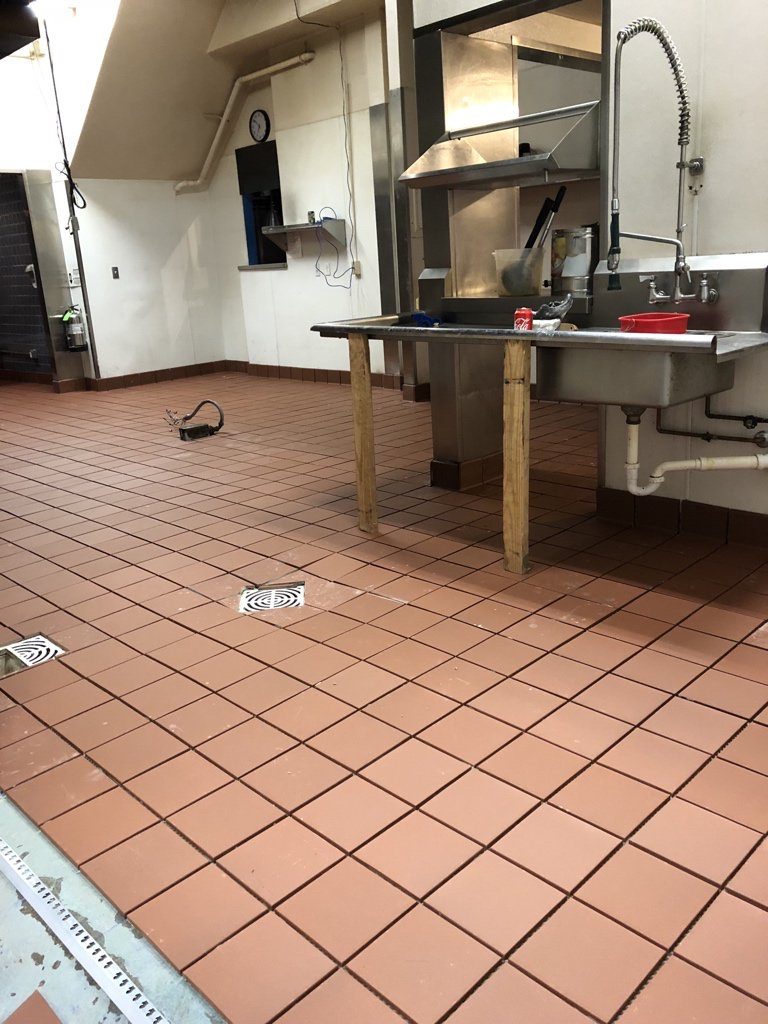
Commercial Kitchen Floor Safety on Oahu: The Slip-Resistance Standard That Protects Your People, Your Brand, and Your Audit Score
Last updated: January 31, 2026
In Hawaii, a commercial kitchen floor is not “just housekeeping.” It is a high-liability surface that decides whether your operation runs smooth, or whether one bad step turns into a workers’ comp claim, a health department citation, a failed corporate audit, or a lawsuit.
If you manage a hotel kitchen, institutional cafeteria, senior living dining program, or multi-unit food service operation on Oahu, you already know the reality, grease moves fast, humidity keeps surfaces tacky, and high volume means you do not get “slow days” to reset.
Quick Answer: What Actually Reduces Slips in Hawaii Commercial Kitchens?
The safest kitchens on Oahu treat floors like a system, not a mop job: remove grease at the pore level, eliminate detergent residue, restore texture where it has been worn smooth, and document every corrective action. The goal is simple, a floor that is scientifically safer during peak production and audit-ready on demand, with proof.
That is also why many operators bundle floor safety with periodic deep sanitation through commercial kitchen cleaning, so grease is removed at the source, not spread around by routine wiping.
- Daily: targeted degrease and rinse, especially fry, dish, and prep paths
- Weekly: detail scrub edges, grout lines, transitions, and drains
- Monthly or quarterly: deep restoration cleaning to reset traction and appearance
- Always: photo and reporting documentation for auditors and risk management
Why Commercial Kitchen Floors Get Dangerously Slippery in Hawaii
Slips do not happen because teams “do not care.” They happen because commercial kitchens create the perfect chemistry for low traction: hot oil aerosols, protein soils, starch pastes, and detergent films, all driven into the surface by traffic, carts, and constant moisture.
One overlooked factor is how quickly oils migrate into grout and textured tile. If your kitchen has quarry tile, ceramic, or porcelain with grout lines, your floor is basically a sponge for grease unless it is cleaned and restored correctly. That is why many facilities pair floor safety with periodic tile and grout cleaning to remove embedded soils that daily mopping cannot reach.
1) Grease Does Not Sit on Top, It Embeds
Grease migrates into grout, pores, and micro-texture. That means the floor can look “fine” from standing height, while still behaving like a skating rink under load, especially during rush periods when moisture and oils are continually replenished.
2) Detergent Residue Is a Hidden Slip Multiplier
In many kitchens, the floor gets cleaner, but also slicker, because soaps and degreasers are not fully rinsed. Residue creates a thin film that reduces friction and attracts more soil, which then builds faster.
3) Humidity and Wet Work Keep the Slip Window Open
Hawaii’s environment makes it easier for floors to stay damp longer. When water and oils stay present, you do not have “dry traction” most of the day, you have “wet traction” most of the day.
4) The Highest-Risk Zones Are Predictable
Most slips cluster in the same zones:
- Dish room entries and exits
- Fry line and saute stations
- Under racks, along wall edges, and behind equipment
- Transitions, thresholds, and drain slopes
- Corner cut-throughs where staff “save steps”
The Real Cost: One Slip Can Erase Months of Margin
Hawaii tracks work injury and illness cases, costs, and days lost through the Workers’ Compensation Data Book published by the State’s labor agency. That statewide reporting exists for a reason, injuries create real cost, real downtime, and real exposure. See the Workers’ Compensation Data Book description from the Hawaiʻi Department of Labor and Industrial Relations.
Slip-and-fall incidents consistently show up as a major operational risk category across food service environments because they produce lost-time and claim severity, not just first-aid events. The claim is only the start. Add schedule disruption, overtime coverage, training replacement staff, management time, incident investigations, and reputational risk if the event becomes public.
For context only, not a promise and not legal advice, some Hawaii premises-liability attorneys cite settlement ranges such as $25,000 to $75,000 for moderate injuries like fractures, and severe injuries that can exceed $500,000 depending on facts, fault, and long-term impact.
The point is not the exact number. The point is leverage, a proactive floor safety program is cheaper than one bad incident, and it signals professional control to auditors, insurers, and corporate stakeholders.
By investing in commercial kitchen floor safety Oahu, properties are engaging in proactive risk mitigation. This is why Renue Hawaii is a preferred partner for global food service management groups throughout the islands, including Sodexo, Foodbuy, and Compass Group. Professional restoration helps reduce risk conditions and protects the facility’s reputation under strict audit standards.
Know Your Floor: The Material Decides the Failure Mode
“Kitchen floor” is not one thing. Different surfaces fail differently, and if you do not diagnose the surface correctly, you will keep repeating the same cleaning cycle without actually increasing traction.
Quarry Tile and Grout
- Common issue: grease saturation in grout lines and pores
- Why it gets slick: grout becomes a reservoir, detergent film adds glide
- What fixes it: deep extraction cleaning plus rinse neutralization
Porcelain or Ceramic Tile
- Common issue: surface film and polished wear patterns
- Why it gets slick: micro-texture wears down in traffic lanes
- What fixes it: film removal, texture restoration options, correct chemistry
Epoxy or Urethane Systems
- Common issue: detergent build and “shiny lanes”
- Why it gets slick: residue plus smoothing from abrasion and carts
- What fixes it: correct degrease chemistry, rinse strategy, maintenance plan
Concrete, Sealed or Unsealed
- Common issue: pore loading and uneven wear
- Why it gets slick: loaded pores plus worn sealer patches
- What fixes it: restoration clean, re-seal strategy, slip-resistance approach
A professional plan starts with one question: Is the floor slippery because it is dirty, because it is coated, or because it has been worn smooth? Each cause has a different fix.
What Auditors and Inspectors Are Really Judging When They Look at Your Floor
When a health inspector or corporate auditor walks into your kitchen, they are not just looking at the floor. They are looking at your control. A safe operation has repeatable systems, documented corrective actions, and proof that issues are not ignored.
Floors are a signal. A slippery, stained, residue-coated kitchen floor quietly suggests bigger problems: sanitation drift, training gaps, and weak preventive maintenance. That is why floor programs work best when they are connected to a broader commercial kitchen cleaning strategy that addresses grease load across the entire environment.
The 3-Part Floor Safety System: Restore, Protect, Maintain
Option 1: Restore
Restoration is the “reset button.” It removes embedded grease, detergent film, and heavy soil load that routine mopping cannot reach. Restoration is not about cosmetics. It is about returning the surface to a safer baseline.
- Deep degrease with appropriate dwell time and agitation
- Edge, grout, and drain detail work
- Extraction and thorough rinsing to remove residue
- Spot corrections in traffic lanes and high-risk zones
Option 2: Protect
Protection is about slowing down re-contamination and preserving texture. Depending on surface type and use, this may involve the correct sealing strategy, surface conditioning, or slip-resistance approach that does not create a maintenance nightmare.
- Surface-specific protection plan, tile, grout, epoxy, concrete
- Targeted controls for high-oil zones
- Clear “what not to use” guidance for staff to prevent residue buildup
Option 3: Maintain
Maintenance protects the gains. The best kitchens do not wait until the floor becomes a problem again. They keep the floor in the safe range through scheduled resets and smart daily routines.
- Daily spot protocols where slips start
- Weekly detail points that stop grease migration
- Monthly or quarterly scheduled restoration resets
Daily, Weekly, Monthly Checklist for Commercial Kitchen Floor Safety
Daily Non-Negotiables, Traction Protection
- Degrease the fry and dish traffic lanes, do not “water mop” them
- Rinse thoroughly so you do not leave a soap film
- Hit transitions and thresholds where water migrates
- Dry mop or squeegee pooled areas, especially near drains
- Document any incident, even “near slips,” while the facts are clear
Weekly Traction Reset Points
- Hand-detail grout lines and edges along walls
- Clean behind rollable equipment and racks
- Detail the dish room exit zone and mat edges
- Inspect drains for flow issues that create standing water
- Review which chemicals were used and verify dilution and rinse
Monthly or Quarterly Restoration, Depending on Volume
- Deep restoration clean to remove embedded oils and residue
- Correct “shiny lanes” where texture is worn smooth
- Reconfirm your floor program aligns with audit expectations
- Capture before and after photos for documentation
- Update your corrective action log and service reports
The Most Common Mistakes That Keep Floors Slippery
If you want a safer floor, avoid the cycle that creates slickness over time.
1) Over-Reliance on “Stronger Chemical” Without a Rinse Plan
Strong chemistry can loosen soil, but if you do not remove and rinse, you often leave behind a film. That film can be more slippery than the original soil.
2) The Floor Is Cleaned, But the Edges Are Ignored
Grease migrates outward and hides along walls, under lips, behind casters, and near kick plates. Those edges then re-contaminate the center lanes.
3) “Looks Clean” Is Treated as “Is Safe”
Visual inspection is not enough. A floor can be bright and still slick if residue remains, texture is worn, or oil is embedded.
4) Matting Is Used as a Substitute for Traction
Mats can help, but they also create trip edges, trap water, and become saturated. If the floor is unsafe, mats become a patch, not a solution.
Documentation: The Audit-Ready Advantage
When a health inspector or a corporate auditor walks into your kitchen, they are not just looking at the floor, they are looking at your documentation. Renue Hawaii provides detailed service reports that show you are taking disciplined steps to ensure hygiene and safety. This due diligence is a practical defense against health department citations and liability disputes because it demonstrates a program, not a reaction.
What Good Documentation Looks Like
A strong floor safety report typically includes:
- Date, time window, and service areas covered
- Observed risk zones, dish exit, fry lane, drains, transitions
- Methods used, agitation, extraction, rinse strategy
- Photo documentation, before, after, and detail shots
- Notes on issues found, standing water, worn texture, damaged grout
- Corrective actions taken and recommended next actions
This kind of reporting supports the “we run a system” narrative that corporate auditors expect, especially in multi-unit or brand-managed food service environments.
Commercial Kitchen Floor Safety FAQ
What actually reduces slips on commercial kitchen floors?
Commercial kitchen slip risk is reduced by removing grease at the pore level, eliminating detergent residue, restoring floor texture where possible, controlling standing water, and maintaining a documented daily, weekly, and monthly cleaning program.
Why do commercial kitchen floors stay slippery after mopping?
Kitchen floors often stay slippery after mopping because grease, detergent residue, protein soils, and starch buildup remain in grout lines, pores, and textured surfaces. Mopping can move soil around without fully extracting it, leaving a slick film behind.
How often should Oahu commercial kitchen floors be deep cleaned?
High-volume commercial kitchen floors on Oahu often need monthly or quarterly deep restoration cleaning, depending on traffic, grease load, floor type, and audit requirements. Daily and weekly maintenance should continue between professional restoration visits.
What areas of a commercial kitchen have the highest slip risk?
The highest-risk areas are usually dish room entries and exits, fry lines, saute stations, prep paths, drain slopes, thresholds, wall edges, under racks, behind equipment, and corner cut-throughs where staff move quickly during service.
How does documentation help with kitchen floor safety?
Documentation shows that the property is running a floor safety system, not reacting after problems occur. Service reports, photos, risk-zone notes, and corrective actions support audit readiness, risk management, and internal accountability.
Conclusion: The Professional Standard in Hawaii
Maintaining a world-class kitchen on Oahu requires a partner who understands the intersection of chemistry, physics, and liability. At Renue Hawaii, we support properties that want more than “clean looking.” They want a floor that performs safer under real production conditions, and they want the documentation that stands up to corporate audits and risk reviews.
If you want a floor program built around traction, proof, and operational reality, request a walkthrough and we will map your risk zones, recommend a restoration and maintenance cycle, and show you exactly what “audit-ready” looks like for your facility.
For kitchens with tile surfaces, pairing floor safety with periodic tile and grout cleaning and a facility-wide commercial kitchen cleaning program is often the fastest path to lower slip risk and cleaner audit outcomes.
Next step: Request a scope and plan, or send photos of your highest-risk zones for a fast initial assessment.