




Tile and Grout Cleaning Hawaii
Commercial Tile and Grout Deep Cleaning for High-Traffic Floors
Dark grout, sticky tile, and a floor that looks uneven after mopping do not always have the same cause. Renue Hawaii assesses the surface, buildup, and grout condition before recommending deep cleaning for hotels, condos, restaurants, and commercial properties.
The aim is to remove recoverable soil and establish what cleaning can improve before you commit to a larger scope.
What Is Making the Floor Look Dirty?
| What you notice | What to check | Next step |
|---|---|---|
| Dark grout or soil in textured tile | Embedded buildup and the response to a cleaned test area | Assess deep cleaning and recovery of loosened soil |
| Sticky or streaky tile | Grease, cleaner residue, and the current rinsing routine | Match the cleaning method to the residue and surface |
| White deposits in wet areas | Mineral buildup, product residue, or another source of discoloration | Identify the deposit before selecting treatment |
| Color remains after cleaning | Permanent staining, prior treatments, or variation in the grout itself | Review achievable results before repeating the same process |
| Cracked or missing grout; loose or broken tile | Physical damage and any underlying installation or moisture issue | Review repair needs; cleaning cannot replace missing material |
Use a representative test area. Include a traffic path, an edge, and the most affected grout so the proposed result reflects the floor you actually need cleaned.
Our Commercial Tile and Grout Cleaning Process
- Inspect and test. Review tile type, grout condition, previous sealers or coatings, and adjacent finishes. Establish the likely result on a small area when needed.
- Prepare the work zone. Clear access, protect nearby surfaces, and remove loose dry soil.
- Loosen and recover buildup. Select suitable cleaning chemistry and agitation, then rinse and extract the dirty solution using a method appropriate for the surface and its condition.
- Review the result. Check grout lines, textured areas, edges, and any discoloration that remains. Discuss sealing only where the grout and intended use would benefit.
- Confirm the handoff. Review drying or curing requirements, reopening conditions, and the maintenance routine with the property team.
Plan Access Before the Floor Is Wet
A restroom, restaurant floor, and main lobby need different access plans. Identify alternate routes, furniture or equipment to move, and the time the area must be available again before work starts.
- Restrooms: Coordinate closures so another facility remains available where possible.
- Restaurants and kitchens: Plan around food service, equipment access, and adjacent preparation areas.
- Lobbies and corridors: Agree on work zones and routes for guests, residents, luggage, and carts.
Keep the work area controlled until it is ready to reopen. Timing depends on water recovery, ventilation, surface condition, and any sealing treatment. A clean-looking floor alone does not establish safe traction or readiness for use.
Before and After Tile and Grout Cleaning Results
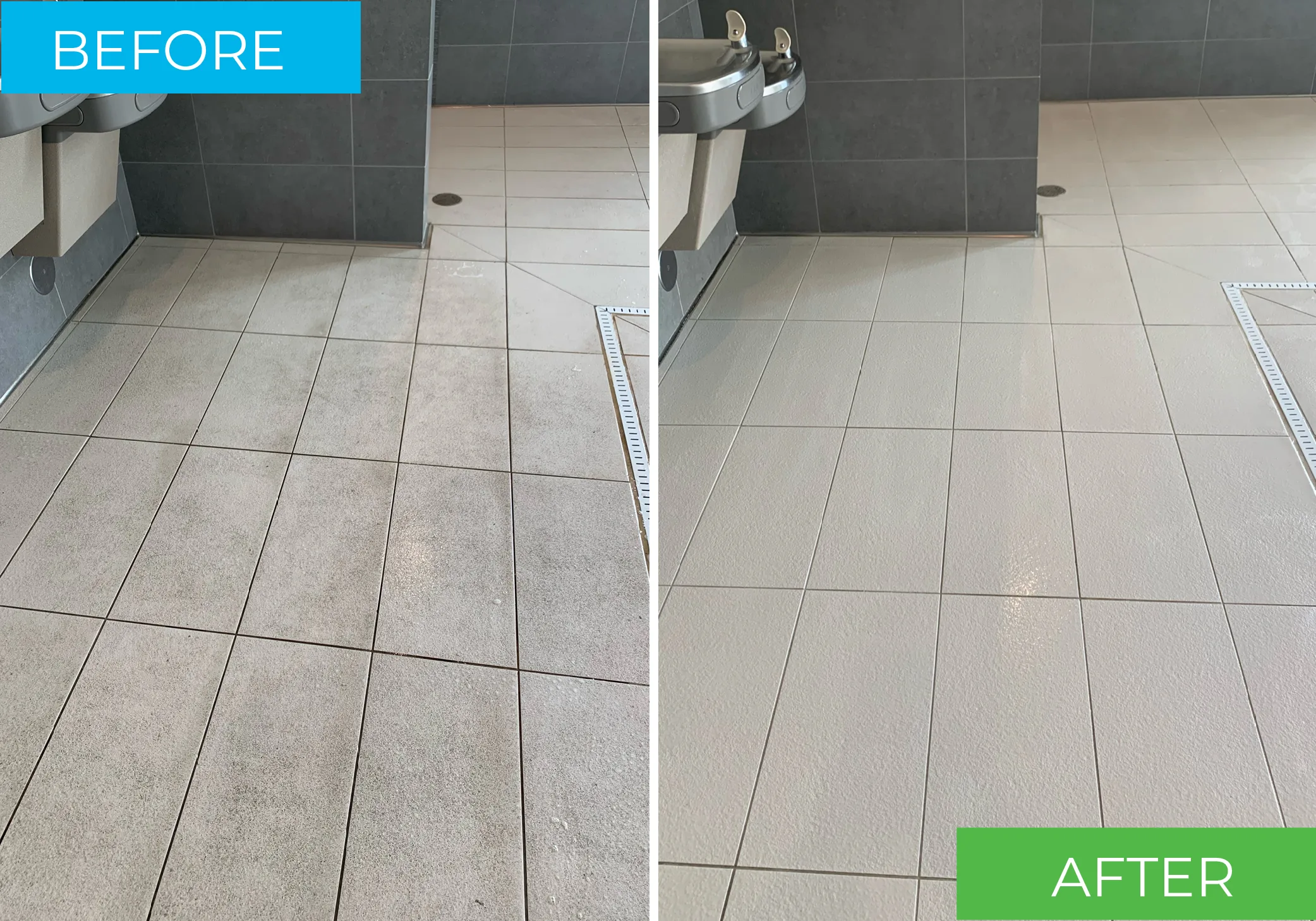
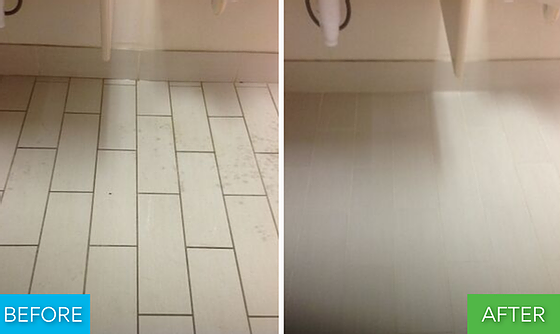
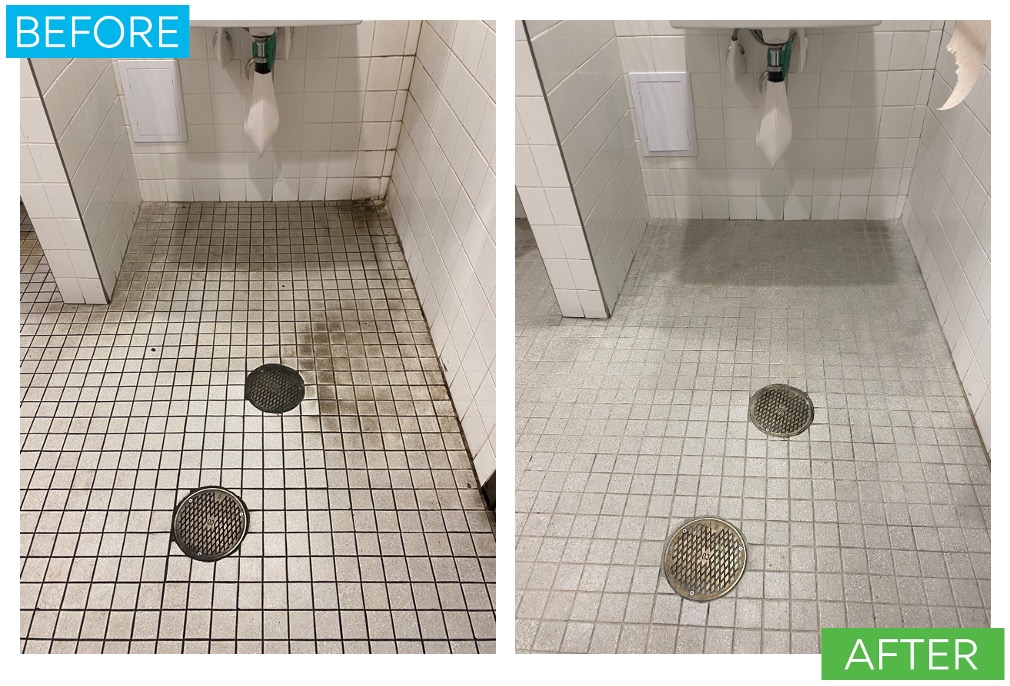
The three comparisons below show visible changes in tile and grout appearance. They illustrate why a test area is useful; they do not establish a guaranteed result for another floor.


Related Commercial Kitchen and Hard Surface Services
For grease-heavy back-of-house areas that need a broader scope, see commercial kitchen deep cleaning. For recurring deposits in showers and wet areas, see hard water spot removal.
If the floor is natural stone and the problem is etching or loss of finish, review marble and natural stone restoration before choosing a tile-cleaning scope.
Key Benefits of Commercial Tile and Grout Deep Cleaning
Frequently Asked Questions About Commercial Tile and Grout Cleaning
Renue works with hotels, condos, restaurants, clubs, and commercial properties across Oahu, Maui, and the Big Island. Typical areas include restrooms, lobbies, corridors, and food-service floors where embedded buildup or uneven grout appearance persists despite routine cleaning.
Base the schedule on how quickly buildup returns after effective daily cleaning. A busy restroom or food-service area may need attention before a lightly used corridor. Track changes in grout color, residue, and cleaning effort, then review the affected areas rather than putting every floor on the same calendar.
We inspect the floor, prepare the work area, remove loose soil, and select appropriate chemistry, agitation, rinsing, and extraction. The equipment and treatment depend on the tile, grout condition, and buildup. We then review the result and any remaining discoloration before confirming aftercare and reopening instructions.
Reopening time depends on the floor, water recovery, ventilation, work area, and any sealing treatment. We plan closures and alternate routes with your team, then confirm when the area can return to use. Cleaning removes targeted buildup, but it does not guarantee slip resistance; surface condition, footwear, moisture, and ongoing maintenance still matter.
Deep cleaning targets grease, residue, and recoverable soil in tile texture and grout lines. It should not be treated as a blanket disinfection or mold-remediation claim. If growth or odor keeps returning, the source of moisture or contamination needs review. Any required sanitizing or disinfecting treatment must be specified separately for the surface and intended use.
Sealing may be appropriate after the grout has been cleaned and assessed. Suitability depends on the grout type, existing treatments, and exposure. A compatible sealer may help resist staining, but it does not repair failed grout or replace routine cleaning. We confirm the selected product’s drying, curing, and maintenance requirements.
No. Cleaning can remove recoverable soil and residue, but permanent staining, chemical damage, previous treatments, and grout color variation may remain. A test area helps distinguish improvement from an expectation the floor cannot meet. Repair or other appearance options can then be reviewed separately.
Ready to Reset Your Tile and Grout?
Partner with Renue Hawaii for commercial tile and grout deep cleaning tailored to hotels, restaurants, condos, clubs, commercial kitchens, restrooms, lobbies, corridors, and high-traffic facilities across Oahu, Maui, and the Big Island.
Spaces, surfaces and service decisions
How the conditions and service decisions connect
These connections summarize the scope or guidance on this page. Follow a concept for its definition and related decisions.
Corridor / hallwaymay have flooringTile flooring
Tile-floored corridors need a surface-appropriate cleaning and access plan; a corridor is a space, not a flooring material.
Grout jointsmay retainEmbedded soil
Dark grout can contain embedded soil; a representative test helps establish what cleaning can improve.
Tile flooringmay retainCleaning residue
Sticky or streaky tile may involve grease or cleaner residue; identify the material and buildup before treatment.
View 1 more connections from this page
Grout jointsmay requireRepair or replacement review
Cracked or missing grout requires repair review because cleaning cannot replace missing material.
Related service, guidance and project accounts
Continue your tile and grout assessment
- Decision guideWhat is the Best Way to Clean Tile and Grout?
- Published projectHawaii Technology Academy Ewa: MCT tile


