
Elevator Scratch Removal & Stainless Steel Restoration Hawaii
Stainless Steel Restoration and Rust Removal for Elevator Surfaces
Watch elevator scratch removal and metal restoration
See Renue Hawaii metal restoration examples and elevator scratch-removal work. The metal, finish and depth of damage need to be assessed before choosing a treatment.
Renue Hawaii service video with on-screen descriptions and background music. Examples show individual projects; results depend on the surface and condition.
Published .
Video preview image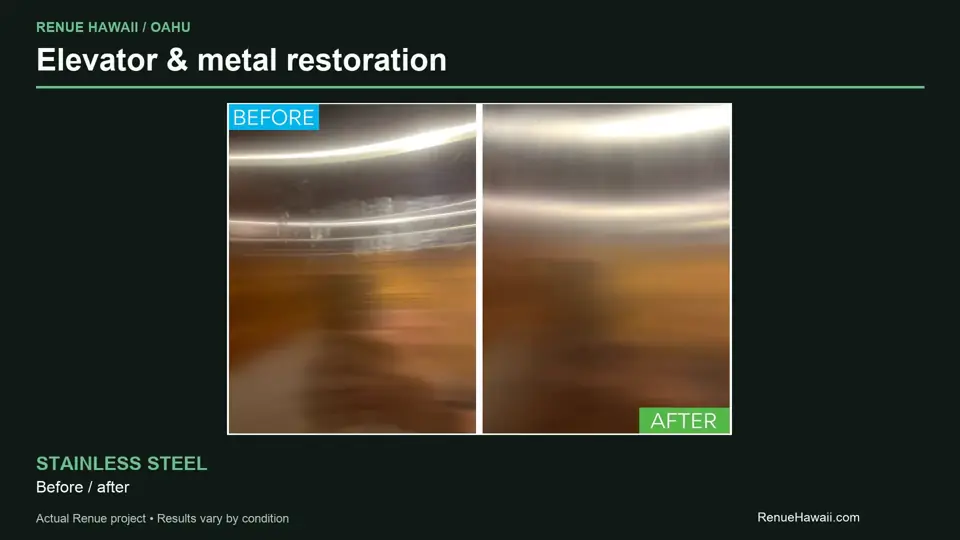
Can Scratched Elevator Stainless Steel Be Restored Before Recladding?
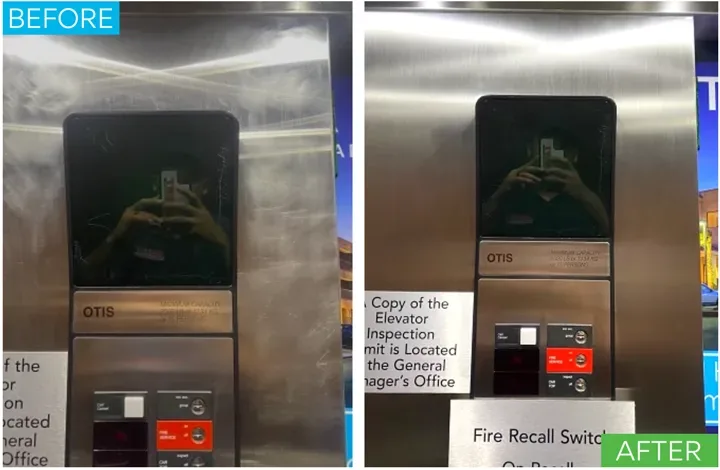
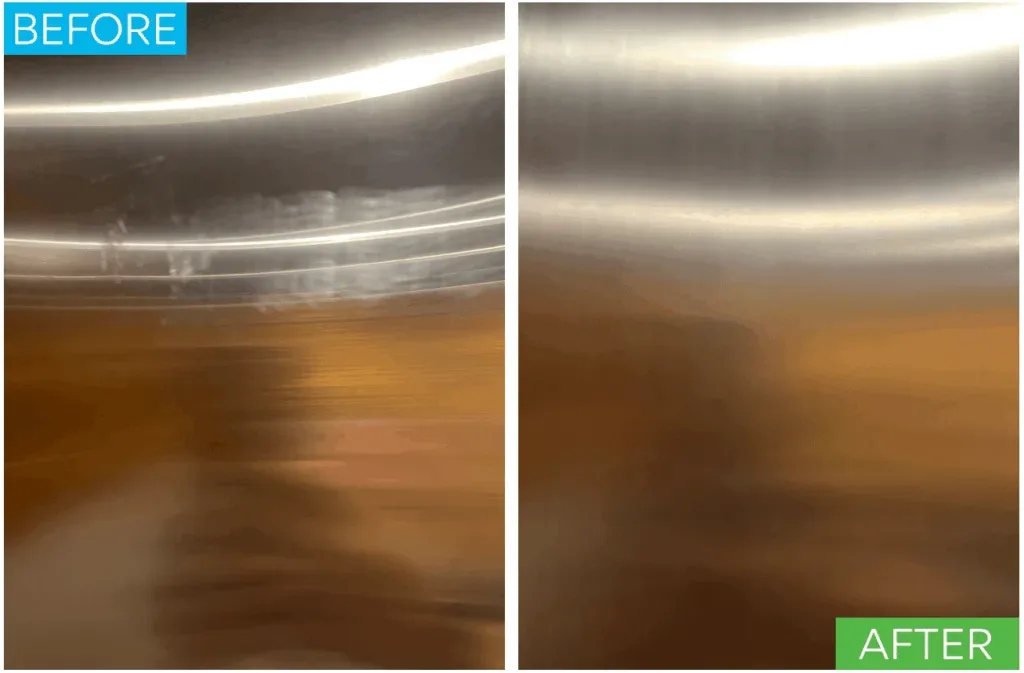
Elevator stainless steel usually does not need to be reclad the moment it looks scratched, scuffed, dull, or worn. In many hotels, condos, high-rises, office towers, retail properties, and commercial buildings, the issue is surface-level damage in the stainless grain, not a failed panel.
Recladding, or replacing the elevator wall panels, should usually be reviewed only when the stainless is dented, deeply gouged, warped, or physically damaged beyond surface restoration. When the damage is surface-level, Renue Hawaii can often restore the existing stainless and avoid the cost, disruption, measuring risk, finish-matching issues, and installation coordination that come with recladding.
Light restoration corrects scuffs. Full restoration repairs the grain. Recladding replaces the panel.
| Stainless Condition | What It Usually Means | Best Next Step |
|---|---|---|
| Light scuffs | Minor surface-level abrasion in the stainless finish | Light stainless restoration |
| Directional scratches | Grain-level surface damage that follows or cuts across the stainless pattern | Stainless steel restoration |
| Cart marks or surface abrasion | Deeper wear from luggage carts, housekeeping carts, maintenance equipment, or repeated contact | Full stainless restoration |
| Dull or uneven panels | Wear from repeated contact, cleaning abrasion, surface damage, or inconsistent prior maintenance | Restoration evaluation |
| Dents, deep gouges, warped panels, or failed cladding | Physical panel damage beyond surface restoration | Recladding or panel replacement review |
Why Cleaning Alone Does Not Fix Scratched Stainless Steel
Regular stainless cleaning removes surface residue, oils, and fingerprints. It does not repair scuffs, directional scratches, cart marks, abrasion, or damage in the stainless grain.
When elevator panels still look scratched or worn after cleaning, the issue is no longer residue. It is surface damage. That is when light restoration or full stainless steel restoration should be reviewed before recladding is considered.
When Light Stainless Restoration Is Enough
Light stainless restoration is often the right fit for minor scuffs, light abrasion, and early surface wear. These issues are common in elevator cabs, lobby panels, condo elevators, hotel elevators, and commercial buildings where stainless steel is touched, cleaned, and contacted frequently.
The goal is to correct visible scuffing and improve the appearance of the existing stainless without moving immediately into panel replacement or recladding.
When Full Stainless Restoration Is the Better Move
Full stainless restoration is the better move when the panel has directional scratches, cart marks, cleaning abrasion, deeper surface wear, or damaged grain appearance. These marks usually cannot be corrected with regular cleaning or basic polishing.
Renue Hawaii works with the existing stainless surface to restore the grain direction and improve the appearance before the property invests in more disruptive options like recladding or panel replacement.
Why Restoration Should Be Reviewed Before Recladding
Elevator recladding can be the right choice when panels are dented, deeply gouged, warped, structurally damaged, or no longer suitable for the property’s appearance standard. But when the issue is surface-level scratching, scuffing, abrasion, or dullness, restoration should usually be reviewed first.
Restoration keeps the existing panel in place, reduces disruption, avoids ordering and installation delays, and can help properties improve elevator appearance without taking on the cost and margin of error that comes with recladding.
Why This Matters for Hotels, Condos, and High-Rise Properties
Elevators are one of the most visible surfaces in a commercial property. Guests, residents, staff, vendors, and visitors see them every day. Scratched or worn stainless steel can make a clean building feel older and less maintained.
For hotels, condos, high-rises, office towers, and commercial buildings, stainless restoration can protect appearance, reduce disruption, and help avoid unnecessary elevator recladding when the existing panels are still good restoration candidates.
Stainless Steel Restoration and Rust Removal for Elevator Surfaces




Questions people ask about our Stainless Steel Restoration Service
Our elevator stainless steel restoration service is designed for hotels, resorts, condos, office towers, medical buildings, and mixed use properties across Oahu and the neighboring islands. We focus on high visibility cabs where scratches, graffiti, and dull panels are dragging down the overall look of the property and first impressions with guests, residents, and tenants.
We restore interior stainless steel wall panels, doors, and control panel surrounds, along with exterior hall doors and jambs where needed. The goal is to remove or minimize scratches and damage, then re-establish a consistent brushed finish so the elevator looks uniform again. Floor and threshold components are evaluated separately based on condition and scope.
Frequency depends on traffic and abuse. Many properties only need a full restoration every few years, with lighter touch ups as needed between projects. High traffic or vandalism prone elevators may benefit from more frequent maintenance cycles so scratches, graffiti, and wear are controlled before they become a major guest or resident complaint.
Most stainless steel restoration projects are phased so only one cab is taken out of service at a time. Each elevator typically takes one to four hours of active work, depending on the amount of damage and scope of the job. Work is done during the day or aligned with a maintenance week, with clear communication to guests and staff about temporary routing.
Many surface scratches, scuffs, and light graffiti can be removed or blended out so they are no longer obvious. Deep gouges, severe impact damage, or previous improper repairs may not disappear entirely, but we can usually reduce their visibility significantly. We set expectations during the walkthrough and may perform a test area on one panel before starting the full project.
Restoration works with the original stainless steel, removing damage and re-establishing the brushed finish, which keeps the authentic look and avoids landfill waste. Replacement or vinyl wraps can be far more expensive and may peel, chip, or show seams over time. Restoration is often the most cost effective way to make your elevators look new again without major construction.
Yes. We use professional grade abrasives and compounds with controlled dust and debris management. Work areas are contained, signage is posted, and we coordinate closely with engineering and security. Our goal is to improve appearance without creating odors, mess, or noise that would impact guests, residents, or day to day building operations.
Ready to Restore Your Property?
Partner with Renue Hawaii for expert deep cleaning and restoration services tailored for hotels, resorts, and commercial properties across Oahu, Maui, and the Big Island.
Spaces, surfaces and service decisions
How the conditions and service decisions connect
These connections summarize the scope or guidance on this page. Follow a concept for its definition and related decisions.
Stainless steel elevator surfacecan haveSurface scratch
Elevator stainless surfaces can have scuffs or scratches whose depth and grain pattern affect treatment.
Surface scratchmay warrantStainless steel restoration
Suitable surface-level elevator stainless damage may be assessed for restoration before recladding.
Elevator panel damagemay warrantRepair or replacement review
Dents, deep gouges or warped elevator panels can require recladding or panel-replacement review.
Related service, guidance and project accounts
Continue your metal surface restoration assessment
- Service scopeComprehensive Commercial Deep Cleaning Services in Hawaii
- Vendor informationCommercial vendor qualifications
- Resource hubCleaning and restoration resources