
Red wine stains on hotel carpet can leave a property team with an awkward decision. Can the room go back into service? Does the ballroom need a vendor before the next event? Is a stained carpet tile ready for replacement, or is repair still possible?
A red mark alone cannot answer those questions. The spill, the carpet fiber and anything already applied to it all matter. A dried stain may still have repair options. A pale spot left by bleach is a different problem.
For housekeeping, engineering, event teams and condo managers, Renue Hawaii's instruction is simple: log it and leave it for the pros. That gives a specialty stain repair technician the chance to assess the mark before another attempt changes it.
Why red wine stains hotel carpet the way it does
Red wine contains color pigments called anthocyanins and plant compounds called tannins. Think of the mark they leave as a weak dye stain: color has been added to the carpet fiber, rather than just loose soil resting on it.
Wine gets its red color from anthocyanins, while tannins also play a part in its color chemistry. Carpet Cleaning Digital's trade guide describes why wine staining can become harder to remove as it dries and oxidizes. The result depends on the carpet and the stain's history.
For an operator, the practical point is that a red wine stain on commercial carpet deserves its own assessment. A surface that looks otherwise clean can still have a visible stain.
The spot you see and the wine you do not: backing, pad and wicking
The visible mark may be only part of the spill. Liquid can reach the carpet backing and, where present, the pad beneath it. Color remaining below the surface can move upward as the carpet dries and become visible again. That return is called wicking.
Cleaning & Maintenance Management explains this below-surface problem. A mark that reappears after cleaning does not necessarily mean another spill occurred. Our guide to why carpet looks dirty again after cleaning explains the broader issue. For the stain list, a note that the mark disappeared and returned is useful information.
Red wine, red drinks and other red marks look alike
A red mark by a minibar might be wine. It might also be a fruit drink, a sports drink or another colored liquid. Color alone does not identify what landed on the carpet.
A commercial stain guide from pwrcarpet distinguishes synthetic red dyes from tannin stains such as wine. The professional approach can differ. That is a reason to record what is known and leave unknowns open. Diagnosing commercial carpet problems starts with understanding what caused the mark.
Mistakes that can make a wine stain harder to repair
The urge to make a red mark disappear before the next arrival is understandable. Trouble starts when several people take turns trying something, with no clear record of what went onto the carpet.
Scrubbing can spread the color and distort the pile. Even if the stain later improves, damaged fibers can leave a visible change in texture. Flooding the spot can carry color toward the backing and contribute to wicking. An apparently smaller mark at the surface does not tell the whole story.
Uncontrolled heat adds another risk. Trade guidance warns that careless heat can distort or melt synthetic fibers. None of these actions belongs in a staff response to an unidentified stain.
Salt and white wine are not reliable answers. Reporting on a UC Davis study found them largely ineffective on the fabrics tested. The study used fabric samples, not installed carpet. Renue Hawaii's staff guidance stays the same: log it and leave it for the pros.
Whatever is on the cart is not necessarily suitable for the carpet. Bleach or another aggressive product can create color loss as well as leave the original stain unresolved. Public guides disagree on home remedies. Renue Hawaii recommends none of them to property staff: log the stain and leave it for the pros.
Wool carpet raises the stakes
A product suitable for one carpet may remove color from another. Wool deserves particular care. The IICRC's carpet guidance specifically cautions about possible color loss when treating wine on wool and other natural fibers.
The fiber needs to be identified before treatment. A staff member should not have to make that call from the carpet's appearance while turning a room or resetting an event space. The same staff rule applies: log it and leave it.
Stain versus color loss: why the difference decides the repair
A wine stain adds unwanted color to the carpet. Bleach damage can take the carpet's own dye away. The second problem needs a different repair decision.
If someone has already used bleach and the area is now pale, yellowish or white, that history matters. It may be color loss, and continuing to treat it as a wine stain will not put the missing dye back.
Renue Hawaii's bleach stain repair and carpet dyeing addresses that separate issue. A spot can need an assessment for both remaining staining and damage from an earlier attempt. Wine stain repair and dye repair should not be described as the same work.
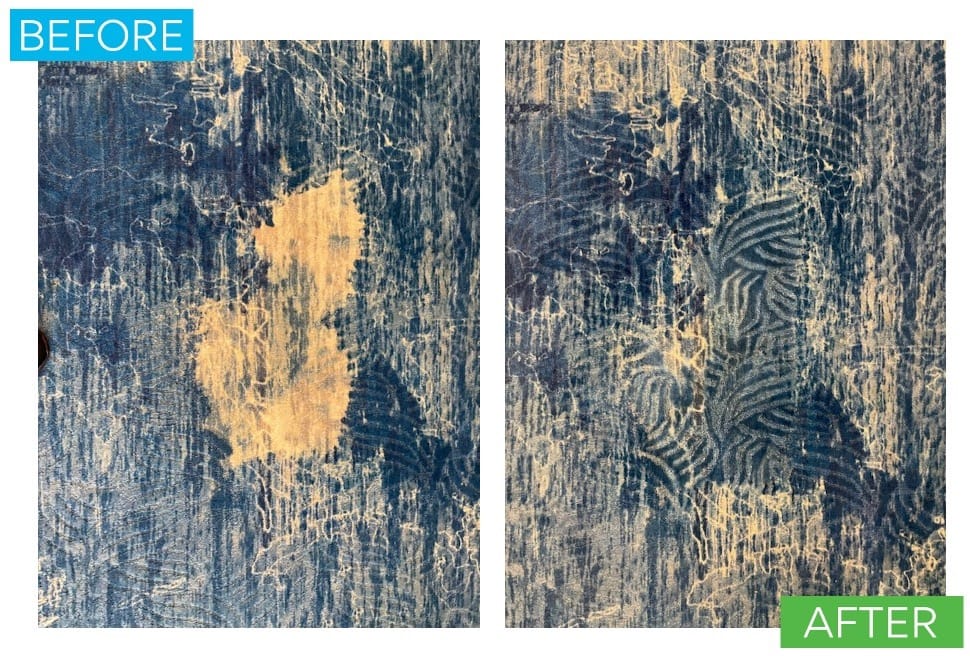
The before and after below illustrates carpet dye repair for color loss.
What housekeeping and engineering teams should do: log it and leave it for the pros
Put the stain on the stain list. Record its location, what was spilled if known, and anything someone has already applied. If the cause is uncertain, say so.
Do not scrub it or apply anything to it. The Renue Hawaii specialty stain repair technician arrives with the list and works through it.
A clear entry also helps the next shift understand that the spot has been reported and is awaiting professional attention. Staff do not need to choose a product or try another remedy.
Where wine ends up: guest rooms, ballrooms, lounges and condo units
In a guest room, a mark found at checkout can become part of the decision about preparing the room for the next arrival. Renue Hawaii's hotel guestroom services include specialty carpet stain repair.
In ballrooms and event spaces, a stain may be reported during breakdown, with another setup approaching. Teams managing banquet halls and function rooms or other event venues need the location and access window clearly recorded so they can discuss the work around their schedule.
A lounge, condo unit or corridor presents its own access and appearance concerns. For an AOAO or condo property manager, an inspection at turnover may be the first chance to document the mark. Condo and high-rise carpet care provides the broader service context.
In each setting, the stain list gives the technician a specific location and the information available about it. The property's schedule and the carpet's condition can then be discussed together.
Professional red wine stain repair for commercial carpet
Renue Hawaii provides specialty commercial carpet stain repair and surface restoration. The technician arrives with the stain list and works through the reported marks. That gives housekeeping and engineering a clear handoff once a stain has been logged.
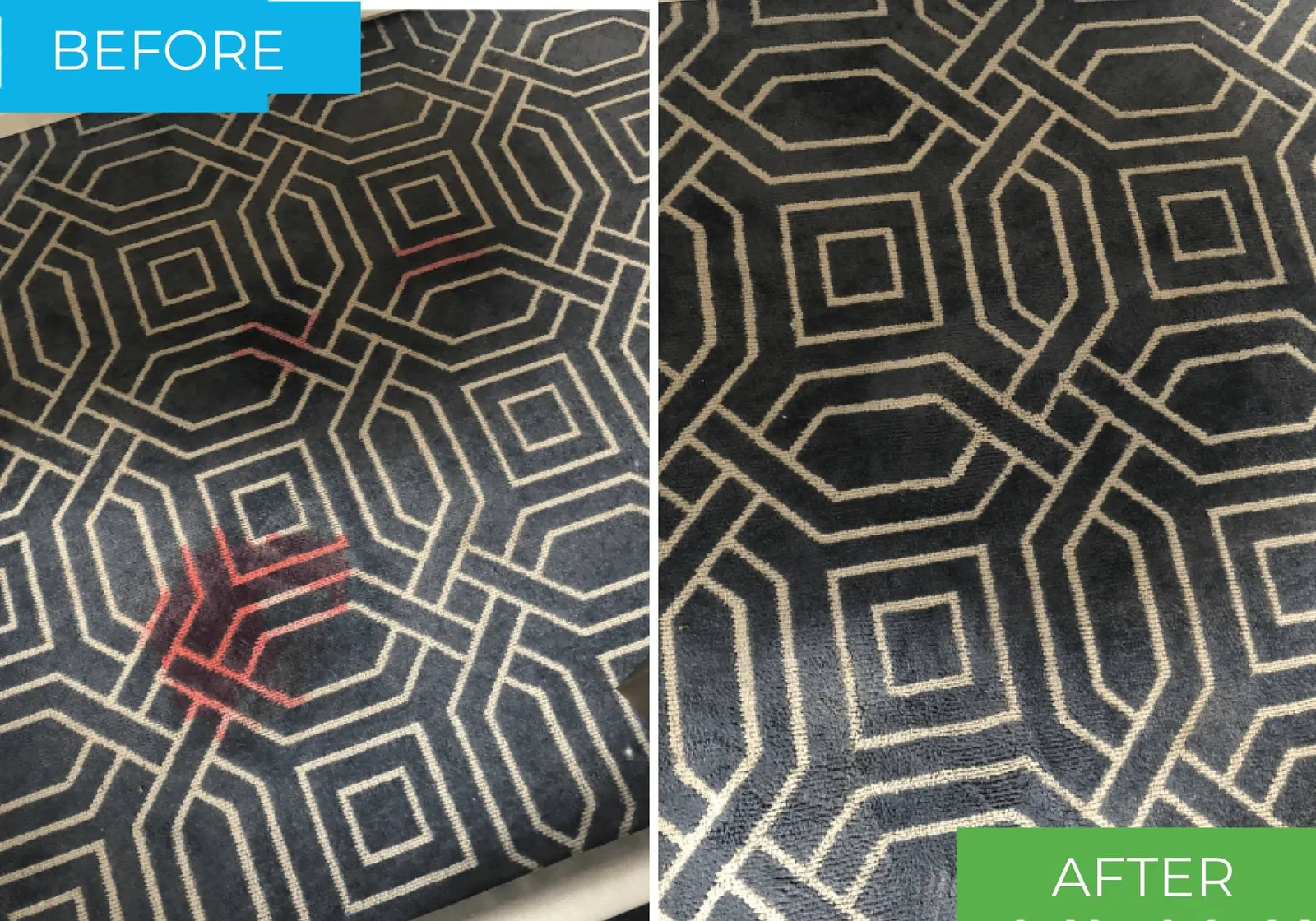
The red wine before and after below shows visible staining along parts of the cream geometric pattern in the first image. That red staining is no longer visible in the second image. The photographs show one example; another carpet's condition and repair options still need to be assessed.
When a wine stain is recoverable and when it is not
A dried stain is not automatically permanent. Professional trade guidance describes older wine stains as harder to remove but still potentially repairable. pwrcarpet's commercial guide reports better prospects for untouched red spills than for spots scrubbed with unsuitable products. For your property, an assessment is still needed to understand what can be repaired.
Complete removal should not be assumed from the color or size of the mark, and a photograph alone cannot promise an outcome.
If bleach has stripped the dye, the options may include dye repair, replacing an individual carpet tile or repairing a section, depending on the installation and condition. Our restoration before replacement guide explains the wider decision. An assessment helps establish whether repair is worth pursuing before replacement is chosen.
Frequently asked questions
Why are red wine stains so hard to get out of hotel carpet?
Red wine carries color pigments called anthocyanins and plant compounds called tannins. The mark can behave much like a weak dye stain. Trade guides describe it becoming harder to remove as the wine dries and oxidizes. If the spill reaches the backing or pad, color left below the surface can rise again as the carpet dries. This is called wicking.
What should hotel housekeeping do about a red wine stain on carpet?
Log it and leave it for the pros. Staff note the stain on the stain list and do not scrub it or put anything on it. The Renue Hawaii specialty stain repair technician arrives with that list and works through it. Scrubbing or using an unsuitable product can complicate repair, and bleach can strip the carpet's own dye.
Is an old or dried red wine stain on carpet permanent?
Not necessarily. Professional trade guides describe dried red wine stains as harder to remove but still potentially repairable. The carpet fiber and any previous treatment affect the decision. Bleach or another aggressive product may also leave missing color. That is a separate problem that may need dye repair or a physical carpet repair rather than further stain treatment.
Have a stain that needs a professional assessment?
Before deciding a carpet tile or section is lost, request a surface assessment from Renue Hawaii. We provide specialty commercial stain repair and surface restoration for property teams managing guest rooms, event spaces and condo interiors.
You can also review our hotel guestroom services, hotel and resort carpet care, and condo and high-rise carpet care.
For your staff, keep the instruction clear: log it and leave it for the pros.