
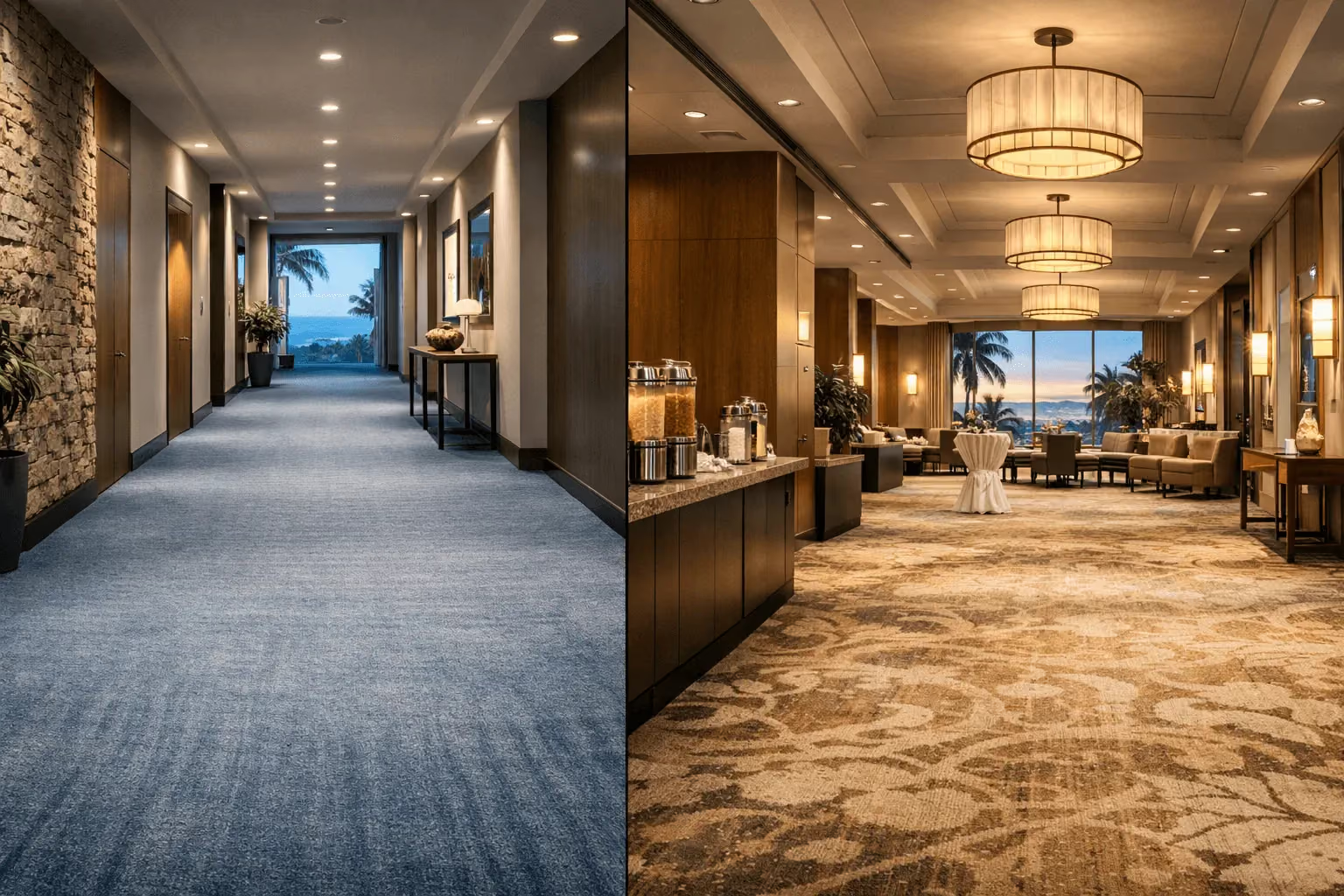
Renue Hawaii commercial carpet resource center
The Hawaii Commercial Carpet Management Guide: Cleaning, Diagnosis, Maintenance, Repair and Replacement Decisions
Commercial carpet should not be managed by one cleaning method or one calendar. It should be managed according to its condition, exposure, specification, operating requirements and stage in the flooring lifecycle.
This guide helps Hawaii hotels, resorts, condominiums, offices, clubs, restaurants, schools, senior-living communities and other commercial properties determine what the carpet is doing, why it is happening and what response makes sense next.
Quick answer
How Should Commercial Carpet Be Managed in Hawaii?
A commercial carpet program should combine routine soil control, immediate spot response, interim appearance maintenance, periodic restorative cleaning, condition documentation and repair when cleaning alone cannot correct the problem.
Different parts of the same building may require different schedules. Entrances, elevator approaches, food-and-beverage routes, luggage paths, main corridors and ballroom pre-function areas often accumulate contamination faster than controlled-access offices or lower-use rooms.
Frequency should therefore be based on how quickly each zone changes, what type of contamination it receives and what appearance standard the property must maintain—not simply on whether the entire building is scheduled quarterly, semiannually or annually.
Step 1: Identify the condition
“Dirty Carpet” Can Describe Several Different Problems
Commercial carpet is often described as dirty whenever it looks dark, uneven, crushed, stained or worn. Those appearances can come from very different conditions, and each condition requires a different response.
Loose Surface Soil
Dry particulate soil resting near the top of the carpet pile. This is primarily controlled through effective vacuuming, entry-mat maintenance and soil-containment practices.
Embedded Contamination
Fine soil, oils, spills, residue and tracked material held deeper within the carpet pile. Professional cleaning may be required to suspend, rinse and recover it.
Spotting and Staining
Localized discoloration caused by food, beverages, oils, transferred dye, cleaning products or another substance. The source, carpet fiber and treatment history affect whether removal is possible.
Color Loss or Color Change
Bleach, peroxide, disinfectants, sunlight and other chemical conditions can remove or alter carpet dye. Cleaning cannot replace color that is no longer present.
Texture Change and Wear
Repeated traffic can crush, abrade, distort or mat carpet fibers. Cleaning may remove contamination around the damage but cannot reconstruct physically worn fibers.
Material or Installation Failure
Delamination, seam failure, rippling, adhesive concerns, backing deterioration and moisture-related conditions may require flooring, installation or building-envelope review.
| Observed Condition | Most Useful First Response | What Not to Assume |
|---|---|---|
| Loose dry soil | Evaluate vacuuming, entry control and frequency | That wet cleaning is automatically required |
| Dark traffic lane | Test for soil, residue, pile distortion and wear | That the entire appearance problem is removable |
| Recurring spot | Identify spill source, residue and possible subsurface migration | That repeated surface spotting will solve it |
| Light or bleached area | Evaluate for chemical color loss and dye-repair suitability | That stronger cleaning will restore missing color |
| Rippling, loose seams or delamination | Document and refer for flooring or installation review | That cleaning is the primary correction |
| Odor that returns | Investigate contamination depth, moisture and drying history | That deodorizer alone will correct the source |
Step 2: Manage the lifecycle
The Five Stages of Commercial Carpet Management
Carpet care begins before the first guest, resident or employee walks on the installation. Decisions made during specification, construction, turnover and the first year can influence how the carpet performs later.
Selection and Specification
Confirm the exact product, fiber, construction, dye system, backing, adhesive, installation requirements, manufacturer cleaning guidance, warranty exclusions and documentation requirements.
The property should also determine whether the selected carpet can realistically be maintained within its staffing, operating windows, appearance standards and capital plan.
Construction, Installation and Turnover
New carpet can accumulate construction dust, adhesive residue, rolling-equipment soil and contractor traffic before normal occupancy begins.
A turnover plan should define protection, inspection, vacuuming, corrective cleaning, damage documentation and when maintenance responsibility transfers to the property.
Routine and Preventive Maintenance
The ongoing program should coordinate entry-soil control, vacuuming, immediate spot response, interim appearance maintenance, periodic restorative cleaning and written records.
Corrective Restoration and Repair
When normal maintenance no longer produces an acceptable result, the property may need restorative extraction, residue removal, odor-source treatment, specialized stain work, localized dye repair or another corrective service.
Replacement Evaluation
Before replacement is approved, determine how much of the appearance problem is removable contamination and how much is permanent wear, color loss, structural failure or installation damage.
Restoration cannot save every carpet, but a condition-based evaluation can help prevent usable carpet from being replaced only because the wrong corrective option was attempted first.
Step 3: Interpret the result
How to Separate Cleaning Failure From Carpet Failure
A disappointing result does not always mean that the carpet was cleaned incorrectly. It can also mean the visible condition was not caused entirely by removable contamination.
Did the area improve and then darken again?
Possible explanations include:
- Spill residue migrating upward during drying
- Cleaning or spotting-product residue attracting new soil
- Contamination remaining in the backing or cushion
- Continued soil entering from an unresolved source
- Insufficient routine vacuuming after service
- A spot treated at the surface without correcting its full depth
Did the traffic lane remain darker after cleaning?
Possible explanations include:
- Permanent abrasion or texture change
- Crushed or distorted pile reflecting light differently
- Old staining or permanent color change
- Embedded contamination requiring a different process
- Uneven wear between the lane and surrounding carpet
Is the damaged area lighter than the surrounding carpet?
Possible explanations include:
- Bleach or peroxide exposure
- Disinfectant or cleaning-chemical damage
- Acne medication or another oxidizing product
- Sun fading
- Permanent dye loss requiring color-repair evaluation
Does odor return during humid conditions?
Possible explanations include:
- Contamination below the visible carpet pile
- Backing, cushion, adhesive or subfloor involvement
- Slow or incomplete drying
- An active moisture source
- Repeated spills in the same area
- Odor treatment that masked rather than corrected the source
Step 4: Map exposure
Build a Carpet Exposure Map Before Setting the Schedule
Most commercial properties do not have one uniform carpet environment. Different zones receive different contaminants, traffic patterns, visibility and operational pressure.
An exposure map divides the property according to what happens to the carpet—not merely according to room names or floor plans.
Soil-Entry Zones
- Exterior entrances
- Parking transitions
- Loading and service entrances
- Beach or landscape access points
These areas receive fine sand, outdoor soil, moisture and other contaminants before they migrate farther into the property.
Transportation Zones
- Elevator approaches
- Main corridors
- Luggage routes
- Service-cart paths
- Mobility-aid routes
Repeated wheel and foot traffic can concentrate soil, compression and abrasion along narrow paths.
Food-and-Beverage Zones
- Buffet routes
- Bar areas
- Host stands
- Server lanes
- Ballroom pre-function areas
These areas may receive food oils, drinks, sticky residue and repeated spot-treatment chemistry.
High-Visibility Zones
- Lobby focal areas
- Registration paths
- Executive floors
- Ballroom entries
- Boardrooms and sales areas
These zones may require earlier maintenance because small appearance changes are more noticeable.
Controlled-Exposure Zones
- Secondary offices
- Low-use meeting rooms
- Controlled-access spaces
- Storage-adjacent offices
These areas may remain within standard longer and should not automatically receive the same frequency as entrances and corridors.
Example: One Hotel May Need Four Different Carpet Schedules
| Zone | Primary Exposure | Possible Management Approach |
|---|---|---|
| Lobby entrance | Outdoor soil, rolling luggage, high visibility | Frequent inspection and targeted interim maintenance |
| Guest corridors | Continuous foot traffic, carts and luggage | Planned maintenance by floor or traffic pattern |
| Ballroom pre-function area | Food, drinks, events and concentrated traffic | Event-sensitive inspection with periodic restoration |
| Administrative offices | Controlled access and lower contamination | Condition-based service at a lower frequency |
Step 5: Score maintenance needs
The Renue Carpet Exposure Score
The Renue Carpet Exposure Score is a practical planning framework for comparing zones inside the same property. It is not a manufacturer warranty rule or universal industry standard. It helps property teams identify where inspection and professional maintenance may need to occur more frequently.
Score each factor from zero to two for each carpeted zone.
| Exposure Factor | 0 Points | 1 Point | 2 Points |
|---|---|---|---|
| Foot traffic | Low | Moderate | Heavy or continuous |
| Exterior soil exposure | Minimal | Indirect | Direct entry or transition |
| Food and beverage exposure | None | Occasional | Frequent |
| Rolling traffic | None | Occasional | Continuous carts, luggage or equipment |
| Appearance sensitivity | Low | Moderate | Guest-facing or high-profile |
| Spot or odor history | Rare | Occasional | Recurring |
Lower Exposure
Inspect at least annually and schedule professional service according to actual condition, warranty requirements and property standards.
Moderate Exposure
Consider semiannual inspection or professional maintenance, then adjust according to how quickly visible change returns.
High Exposure
Consider quarterly service or a combination of interim and restorative maintenance.
Critical Exposure
Evaluate monthly or bimonthly interim attention with periodic restorative cleaning, source control and closer performance tracking.
Important:
A score establishes a planning starting point. The carpet manufacturer’s requirements, warranty documents, actual soil accumulation, fiber type, installation system and previous service results should still control the final program.
Step 6: Choose the response
Choose the Response After the Condition Is Identified
A complete carpet-management program uses several responses. It does not rely on one cleaning method for every condition and every visit.
Routine Soil Control
Use effective vacuuming, entry mats, spill-response procedures and source control to reduce how much contamination reaches the carpet and how deeply it becomes embedded.
Interim Appearance Maintenance
Address visible traffic patterns between restorative services where fast drying, controlled disruption and appearance improvement are priorities.
Restorative Cleaning
Remove deeper contamination, accumulated residue, oils and soil that routine vacuuming and interim maintenance cannot fully correct.
Targeted Spot, Stain and Odor Treatment
Evaluate individual conditions according to the substance, fiber, prior treatment, depth and source rather than repeatedly cleaning the entire surrounding area.
Localized Color or Material Repair
Consider carpet dye repair, selective repair or flooring review when the condition is color loss, localized damage or another problem that cleaning cannot reverse.
Planned Replacement
Replace when permanent wear, widespread damage, installation failure, specification mismatch or lifecycle economics make restoration an unsuitable investment.
Step 7: Protect the drying window
Drying Is a Managed Operating Condition—not a Single Equipment Claim
Drying depends on more than whether a process is described as low moisture or extraction. The amount of moisture applied, recovery efficiency, carpet construction, backing, cushion, airflow, temperature, humidity, building ventilation and service timing all influence when the carpet can safely return to normal use.
Moisture Application
Use enough moisture to perform the required cleaning without unnecessarily saturating the carpet, backing or underlying materials.
Recovery
Applied moisture and suspended contamination must be recovered effectively. Cleaning input alone does not determine the result.
Air Movement
Airflow helps move moisture away from the carpet surface and should be planned around occupied areas, doors, corridors and operating rules.
Return-to-Service Timing
The property should account for guest traffic, carts, furniture, slip-transfer concerns and potential resoiling before reopening the area.
Step 8: Measure performance
Use a Commercial Carpet Service Scorecard
A successful maintenance program should be evaluated by more than whether the carpet looked better immediately after service. Track the same zones over time to understand how long the result holds and what changes first.
Appearance
- Did overall color and brightness improve?
- Did traffic lanes become more even?
- Which conditions improved but remained visible?
- Were permanently worn or damaged areas documented?
Spot Performance
- Which spots were removed?
- Which spots improved but remained?
- Which areas appear to be permanent color change?
- Did any spots reappear during drying?
Drying
- Was the carpet dry before normal traffic resumed?
- Were slow-drying areas identified?
- Was airflow adequate for the actual environment?
- Did furniture, carts or traffic return too early?
Recurrence
- How long before the first visible traffic lane returned?
- Which zones declined first?
- Did odor return?
- Did previously treated spots recur?
Routine Maintenance
- Was vacuuming performed at the planned frequency?
- Were entry mats cleaned and maintained?
- Were new spills addressed promptly?
- Were residue-producing spot products being used?
Program Adjustment
- Should one zone be cleaned sooner than the rest?
- Can a lower-exposure zone be serviced less often?
- Does the process need to change?
- Is repair or replacement evaluation now appropriate?
Create Repeatable Documentation
Select representative areas and photograph them from the same position, distance and general lighting during each service cycle. Consistency makes it easier to distinguish actual decline from differences in camera angle or lighting.
Documentation should identify the date, zone, service performed, known conditions, remaining concerns and recommended next review. This provides a more useful maintenance history than a series of unconnected invoices.
Step 9: Make the asset decision
Clean, Repair, Replace or Investigate?
The right next step depends on what is physically happening to the carpet. This decision table is a planning aid; testing and on-site evaluation may still be required.
| Condition | Clean | Repair | Replace | Investigate First |
|---|---|---|---|---|
| Loose or embedded soil | Primary | Usually no | Usually no | Confirm fiber and soil load |
| Sticky cleaning residue | Corrective cleaning | Usually no | Usually no | Identify chemistry and source |
| Food or beverage spot | Often | Sometimes | Rarely | Identify substance and prior treatment |
| Bleach or chemical color loss | No color replacement | Possible dye repair | Possible if extensive | Confirm fiber and color-loss mechanism |
| Abraded or crushed traffic lane | May improve surrounding soil | Limited | Possible | Separate contamination from wear |
| Localized physical damage | Not the correction | Possible | Possible if repair is impractical | Assess construction and matching material |
| Delamination or seam failure | Not the primary correction | Possible | Possible | Installation review |
| Recurring moisture-related odor | Only after source is understood | Possible | Possible if materials are compromised | Moisture and source investigation |
| New carpet with construction contamination | Often appropriate | Only for documented damage | Usually no | Review installation and warranty records |
| Widespread permanent wear | Limited cosmetic improvement | Usually impractical | Likely | Confirm remaining useful areas and phasing |
What Should Be Considered Before Replacement Is Approved?
Carpet Condition
Separate removable contamination from wear, color loss and structural failure.
Replacement Scope
Determine whether the entire installation or only selected zones require replacement.
Operational Disruption
Account for furniture, guest access, phasing, elevators, noise, adhesive cure and service windows.
Complete Project Cost
Include material, freight, removal, disposal, floor preparation, installation, transitions, base and operational impact.
Step 10: Preserve warranty and service records
Carpet Maintenance Documentation Should Begin at Installation
Carpet warranty requirements vary by manufacturer and product. Property teams should preserve the product specification, purchase records, installation information, approved maintenance guidance and professional service history.
Useful records may include:
Evidence from completed Hawaii projects
Four Commercial Carpet Management Lessons From the Field
Case studies are most useful when they establish a repeatable management principle—not merely when they show that carpet became cleaner.
New Carpet Can Already Need Professional Maintenance
New carpet can accumulate construction and installation contamination before normal occupancy creates obvious traffic lanes. Waiting for visible decline may not be the best starting point for maintenance.
At Nauru Tower, professional maintenance was established for newly installed Masland wool carpet instead of waiting until the carpet visibly appeared old or heavily soiled.
A Permanent-Looking Condition May Still Be Contamination
A severe dark area should be evaluated before it is classified as permanent damage. Embedded contamination, residue, pile distortion and wear can produce similar appearances from standing height.
At A‘eo Ward Village, restorative cleaning corrected stubborn elevator-area staining that had remained after previous cleaning attempts and appeared permanent.
Cleaning Cannot Replace Missing Dye
Bleach and certain chemical exposures create color loss rather than soil. Repeated cleaning cannot restore color that has been removed from the fiber.
At American Savings Bank Tower, identifying localized color loss allowed Renue to perform carpet dye repair instead of repeatedly cleaning or prematurely replacing the carpet.
Operating Windows Are Part of the Maintenance Strategy
A technically appropriate process still has to fit guest traffic, reopening requirements, security, access, drying and morning operations.
Ala Moana Hotel used scheduled overnight lobby carpet cleaning to maintain a heavily used public area while reducing disruption to guests and property operations.
The management framework
The Renue Commercial Carpet Management Framework
The framework reduces carpet management to five repeatable actions that can be used across different buildings, carpet types and lifecycle stages.
Assess
Identify whether the condition is soil, staining, color loss, wear, residue, moisture or material damage.
Protect
Control entry soil, maintain vacuuming, respond to spills and preserve product and warranty records.
Restore
Use the appropriate cleaning, stain treatment, odor correction or repair response for the identified condition.
Monitor
Track the zones that decline first, how quickly conditions return and whether the program is producing a durable result.
Optimize
Adjust frequency, method, zone priorities and replacement planning according to measured performance.
Commercial carpet resource center
Continue With the Resource That Matches Your Decision
Service Commercial Carpet Cleaning Hawaii
Review Renue’s commercial carpet services, operating approach and scheduling options.
Diagnosis Commercial Carpet Problems Diagnosis Guide
Determine whether the visible problem is soil, staining, wear, color loss, residue, moisture or material damage.
Planning Commercial Carpet Buying and Maintenance Guide
Evaluate carpet choices, construction exposure and maintenance requirements before installation.
Warranty Commercial Carpet Warranty Maintenance Guide
Understand the importance of product-specific requirements and maintenance documentation.
Decision Tool Commercial Carpet Decision Tree
Use a visual decision path to distinguish cleaning, repair and further investigation needs.
Next Step Request a Carpet Walkthrough or Quote
Submit photos, carpet information, floor counts, square footage or known concerns for review.
Frequently asked questions
Commercial Carpet Management Questions
How often should commercial carpet be professionally cleaned in Hawaii?
There is no single interval that is correct for every property or every zone. Frequency should reflect foot traffic, exterior soil exposure, food-and-beverage activity, rolling traffic, appearance sensitivity, spot history, carpet specifications and manufacturer requirements.
Higher-exposure zones may require monthly or bimonthly interim care with periodic restorative cleaning. Moderate-exposure areas may be appropriate for quarterly or semiannual service, while controlled areas may be maintained according to annual inspection and actual condition.
How can a property tell whether a dark traffic lane is dirty or worn?
The area should be evaluated for removable soil, residue, pile distortion, staining and physical abrasion. If cleaning removes the contamination but the lane remains visually different, permanent texture change or wear may be affecting how the fibers reflect light.
Why do carpet spots sometimes return after cleaning?
A spot may return when contamination or residue remains below the visible surface and migrates upward during drying. It may also return because the source is still active, spotting-product residue attracts new soil or the area was treated only at the surface.
Can professional cleaning correct carpet wear?
Cleaning can remove contamination that makes a worn area look darker or more severe, but it cannot rebuild fibers that have been crushed, abraded or permanently distorted. Separating soil from wear is essential for setting realistic expectations.
When should carpet dye repair be considered instead of cleaning?
Dye repair may be appropriate when bleach, peroxide, disinfectant or another chemical has removed or altered carpet color. Suitability depends on the carpet fiber, construction, extent of damage, remaining dye and ability to match the surrounding color.
Should the entire building be cleaned on the same schedule?
Not necessarily. Entrances, corridors, elevator areas, food-and-beverage routes and other high-exposure zones often decline faster than lower-use offices or controlled spaces. An exposure-based program can concentrate resources where they produce the most useful result.
What should be documented after commercial carpet service?
Useful records include the service date, zones treated, method, products used, known stains or damage, drying concerns, before-and-after photographs, remaining conditions and the recommended next inspection or service interval.
When should a property investigate replacement instead of additional cleaning?
Replacement should be evaluated when widespread permanent wear, structural failure, specification mismatch, extensive color damage or lifecycle economics make further restoration unsuitable. Before approval, the property should still separate removable contamination from permanent damage and determine whether selective replacement is possible.
Condition before method
Request a Commercial Carpet Walkthrough
Renue Hawaii can evaluate the carpet’s condition, exposure zones, operating requirements and service history before recommending cleaning, stain treatment, dye repair, maintenance planning or further investigation.
Photos, approximate square footage, floor counts, carpet specifications, known spill history and current maintenance frequency are helpful when available.
Explore how spaces, surfaces and service decisions connect for commercial carpet
Related service, guidance and project accounts
Continue your commercial carpet assessment
- Service scopeCommercial Carpet Cleaning for Hotels, Condos & Businesses
- Decision guideCommercial Carpet Problems & Diagnosis Hawaii
- Decision guideCommercial Carpet Restoration Before Replacement Hawaii
- Decision guideCommercial Carpet Buying & Maintenance Guide Hawaii
- Decision guideCommercial Carpet Warranty & Maintenance Programs Hawaii
- Published projectNauru Tower: wool-carpet maintenance