Kitchen Exhaust · Honolulu & Oahu
Kitchen Hood Failed Inspection in Honolulu: How to Pass Re-Inspection
A failed hood inspection is rarely about the surfaces you can see. It is about grease somewhere in the full exhaust path.
The findings need to be corrected and the system re-inspected. For most kitchens that means a corrective cleaning of the hood, filters, ductwork and exhaust fan as one connected system, plus documentation your team can hand to the inspector.
We review the inspector’s findings, the full exhaust path, and the access the corrective clean requires.
After a Failed Inspection
What happens next
The inspection does not end at the canopy, and neither does the correction. Passing re-inspection takes four things, in order:
-
Review the findings
Start from the inspector’s report. It identifies where grease was found and which parts of the system were flagged, and it sets the scope for the corrective work.
-
Corrective clean of the full path
The grease the inspector found is removed through the whole exhaust path, not wiped from the visible surfaces. Access requirements are established in a walkthrough before work begins.
-
Documentation assembled
Before and after photographs and a written report of the completed work, including any areas that could not be reached and the follow-up they need.
-
Re-inspection
The system is re-inspected against the original findings. A complete service report makes it easy for the inspector to see exactly what was done.
One Connected System
The parts of the system that matter
Grease travels with cooking exhaust, so the hood, filters, ducts and fan work as one system, and the inspection covers all of it. A corrective clean addresses each part:
Hood & canopy
Grease-bearing surfaces and collection areas above the cooking line.
Grease filters
The removable filters and surrounding areas, with filter condition reviewed.
Exhaust ductwork
The connected duct route through available access, including direction changes where grease collects.
Exhaust fan
The fan’s grease-bearing surfaces, with rooftop grease containment checked.
Common Findings
What inspectors flag
Inspectors look beyond the polished canopy. A system can look clean at the cooking line and still fail on what is happening above and behind it. Common findings include:
Grease inside the ductwork
Buildup inside the exhaust ductwork, especially past bends and in horizontal runs where grease settles.
Loaded or gapped filters
Grease-loaded filters, or filters with gaps that let grease bypass the filter bank and enter the duct.
Grease on the fan and roof
Accumulation on the exhaust fan and around the rooftop discharge.
Sections never cleaned
Parts of the system that were never reached because access was limited or missing.
Missing cleaning records
Missing or incomplete cleaning records for the system when the inspector asks for them.
Renue Hawaii cleans the connected system as one scope. Our hood and exhaust cleaning service covers the hood and canopy, grease filters, the connected duct route through available access, and the exhaust fan.
The Corrective Clean
What passing re-inspection takes
A corrective clean after a failed inspection is not a surface wipe-down. It means removing the grease the inspector found, through the full exhaust path, to bare, inspectable condition in the areas the scope can reach.
Certified work, to a defined standard. The work is performed by MFS certified kitchen exhaust hood cleaning technicians, and Renue Hawaii follows NFPA 96 cleaning standards. The walkthrough establishes the system boundaries and access requirements before work begins, so there are no surprises about what the scope can and cannot reach.
That last point matters at re-inspection: if a section cannot be reached with the access the building provides, it is identified and recorded rather than passed over, and the report explains what it needs.
Proof of Work
Documentation for re-inspection
Passing the re-inspection is easier when the inspector can see exactly what was done. Every Renue Hawaii hood cleaning service includes:
- Before and after photographs of the components cleaned.
- A written report of the completed work: the hood, filters, duct sections and fan areas cleaned.
- Access limitations identified, including any inaccessible or uncleaned areas and why they need attention.
- Follow-up needs explained, such as further access or repair review.
Keep the report with your property’s maintenance records so your team can refer to the completed work and plan follow-up. The Honolulu Fire Department’s commercial kitchen guidance emphasizes documented inspections and cleaning.
Staying Ahead of It
How often should the system be cleaned?
Cleaning frequency depends on cooking volume and what you cook. Kitchens with high-volume cooking, solid fuel, or heavy grease-producing equipment need cleaning more often than low-volume operations. The right interval is the one that keeps grease from building up in the duct and on the fan between services.
Use the failed inspection as the reset point. If your last inspection found grease deep in the system, the interval that produced that buildup is too long. The corrective clean is the time to reset it, based on cooking volume rather than the calendar alone.
The Wider Kitchen
Pair it with the kitchen itself
A failed hood inspection often points at the wider kitchen. Grease that reaches the exhaust system also settles on floors, walls and equipment. Many properties schedule the corrective hood work together with commercial kitchen deep cleaning so the whole space is reset in one work window.
Related Service
Commercial kitchen deep cleaning
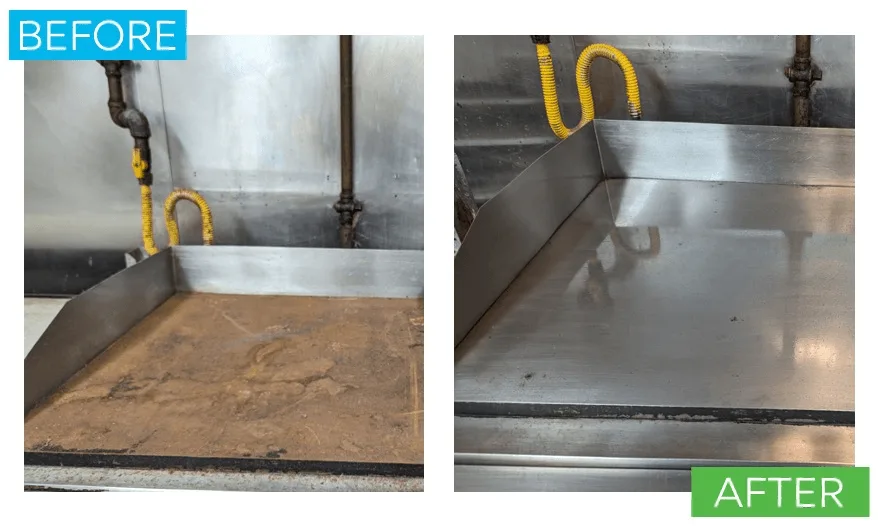
Agreed floors, walls, equipment surfaces and the buildup zones daily cleaning misses, scoped in the same walkthrough as the exhaust work. The photograph shows a flat-top and surround before and after a Renue deep clean.
View kitchen deep cleaningQuestions
Failed hood inspection FAQ
What happens after a commercial kitchen fails a hood inspection in Honolulu?
The findings need to be corrected and the system re-inspected. In most cases that means a corrective cleaning of the full exhaust path, hood, filters, ductwork and exhaust fan, plus documentation of the work for the inspector.
Why did the hood fail if the visible surfaces looked clean?
Because the inspection covers the full exhaust path. Grease commonly builds up inside ductwork, on the exhaust fan, and in sections that routine surface cleaning never reaches. A canopy can look clean while the duct above it is loaded.
What documentation should we have for the re-inspection?
Before and after photos of the components cleaned and a written service report listing what was cleaned, any areas that could not be accessed, and follow-up needs. Renue Hawaii includes both with every hood cleaning service.
Who performs the corrective cleaning?
Only certified technicians perform Renue Hawaii hood cleaning and kitchen exhaust inspection work. Our team’s qualifications include MFS Trade School certification as Kitchen Exhaust Hood Cleaning Technicians and Kitchen Exhaust Hood Cleaning Inspectors, and the work follows NFPA 96 cleaning standards.
How do we keep from failing the next inspection?
Set the cleaning interval by cooking volume rather than by the calendar alone, keep the service reports on file, and act on the access limitations and follow-up items your report identifies instead of letting them roll into the next cycle.
Next Step
Book a corrective cleaning walkthrough
Call Renue Hawaii on Oahu or request a walkthrough, and we will review the inspector’s findings, the full exhaust path, and the access the corrective clean requires.