Commercial Carpet Cleaning Hawaii

Commercial Carpet Deep Cleaning for High-Traffic Properties

Renue Hawaii provides commercial carpet deep cleaning across Oahu, Maui, and the Big Island for hotels, resorts, condominiums, offices, restaurants, schools, clubs, retail properties, ballrooms, function rooms, and other high-traffic commercial spaces.

Our commercial extraction and low-moisture systems address embedded soil, traffic-lane buildup, spots, odor-causing contamination, and residue that routine vacuuming and surface maintenance cannot fully remove.

Vacuuming controls routine surface soil. Professional carpet maintenance addresses the deeper contamination affecting appearance, odor, and long-term carpet performance.

Need to schedule service or determine what the carpet needs? Request a walkthrough, scope review, or written quote.
Schedule Carpet Service

Why Commercial Carpet in Hawaii Requires a Different Cleaning Plan

Commercial carpet in Hawaii experiences a different combination of soil, moisture, traffic, and operating pressure than carpet in a typical residential setting. Fine sand, abrasive grit, humidity, sunscreen and body oils, food and beverage spills, luggage wheels, service carts, concentrated elevator traffic, and continuous occupancy can all affect how quickly the carpet changes in appearance.

These conditions can make carpet appear permanently worn when part of the visible problem may still be removable contamination. They can also create conditions that cleaning alone cannot correct, including fiber abrasion, chemical color loss, backing problems, and installation-related damage.

Renue builds the recommendation around the carpet fiber, construction, contamination level, stain history, traffic pattern, drying requirements, manufacturer guidance, and operating schedule of the property.

Commercial carpet evaluation

How Renue Evaluates Carpet Before Recommending Service

Most carpet recommendations begin with a cleaning method. Renue begins by identifying the condition.

Commercial carpet appearance problems generally fall into four broad categories. More than one condition may be present in the same area.

Contamination

Removable soil, oils, dust, spills, residue, and tracked-in material held on or within the carpet.

Staining or Color Change

Discoloration caused by a substance, transferred dye, chemical exposure, moisture movement, or another change to the carpet’s original color.

Fiber Wear

Abrasion, crushing, matting, distortion, or texture loss caused by repeated traffic and use.

Material Damage

Permanent dye loss, damaged fibers, seam failure, backing problems, delamination, adhesive concerns, or other structural deterioration.

A dark traffic lane may contain both removable soil and permanent abrasion. Professional cleaning may remove the contamination and produce significant improvement, but it cannot rebuild fibers that have already been physically worn.

The purpose of the evaluation is to separate what may respond to cleaning from what may require repair, specialist review, selective replacement, or realistic expectation-setting before service begins.

Need a deeper diagnostic explanation?

Review how Renue distinguishes recoverable contamination from staining, wear, color loss, moisture conditions, backing problems, and carpet failure.

Read the Commercial Carpet Problems Diagnosis Guide

Evidence from completed Hawaii projects

What Completed Commercial Carpet Projects Have Demonstrated

New Carpet Should Not Wait for Visible Decline

Construction activity, installation debris, rolling equipment, and early occupancy can introduce contamination before new carpet develops obvious traffic lanes. The first professional maintenance visit should be based on actual exposure, product requirements, and manufacturer guidance—not age alone.

Project evidence: Nauru Tower

Nauru Tower established professional maintenance for newly installed Masland wool carpet instead of waiting for visible deterioration.

View the Nauru Tower wool carpet case study

Carpet That Looks Permanently Damaged May Still Be Restorable

A dark or stained traffic area should not be judged from standing height alone. Embedded contamination, residue, fiber distortion, and permanent wear can look similar but require different responses.

Project evidence: A‘eo Ward Village

At A‘eo Ward Village, restorative cleaning removed stubborn elevator-area stains that had remained after previous cleaning attempts and appeared permanent.

View the A‘eo Ward Village carpet cleaning case study

Not Every Carpet Appearance Problem Is a Cleaning Problem

Bleach exposure and some chemical conditions remove or alter carpet color. Additional cleaning cannot replace missing dye and may delay the correct repair.

Project evidence: American Savings Bank Tower

Identifying the condition as color loss allowed Renue to perform localized carpet dye repair instead of repeatedly cleaning or unnecessarily replacing the carpet.

View the American Savings Bank Tower dye repair case study

Maintenance Frequency Should Follow Exposure—not One Calendar

Entrances, elevator approaches, lobby lanes, corridors, ballrooms, food-and-beverage areas, and lower-use spaces do not accumulate soil at the same rate. The schedule should reflect traffic, contamination, appearance standards, drying windows, and property operations.

Project evidence: Ala Moana Hotel

Ala Moana Hotel used scheduled overnight lobby carpet cleaning to maintain a heavily used public area while reducing disruption to guests and morning operations.

View the Ala Moana Hotel carpet maintenance case study
Not sure whether the carpet needs cleaning, repair, or replacement review? Send photos or request an on-site walkthrough before a method is selected.
Request a Scope Review

Commercial Carpet Cleaning Methods

No single method is appropriate for every carpet or every service visit. Renue selects the process according to the condition, carpet construction, required result, drying window, and operating needs of the property.

Hot Water Extraction

Used when carpet requires deeper rinsing and recovery of embedded soil, oils, spills, cleaning residue, and other contamination held within the pile.

Low-Moisture Encapsulation

Used for interim appearance maintenance and occupied spaces where faster drying and reduced disruption are priorities.

Targeted Spot and Stain Treatment

Used when individual spills or recurring spots require separate evaluation and treatment rather than repeated cleaning of the entire surrounding area.

Carpet Dye and Color Repair

Used for qualifying bleach spots and chemical color-loss conditions that cannot be corrected through cleaning.

Many commercial properties benefit from a planned combination of restorative extraction and low-moisture interim maintenance rather than relying on the same process during every visit.

Portable Extraction vs. Truck-Mounted Carpet Cleaning

Commercial carpet cleaning is not determined by whether the equipment is mounted in a vehicle. The important questions are whether the system can reach the work area, remove the required contamination, recover moisture effectively, protect the carpet, and fit the operating requirements of the building.

Truck-mounted systems can be effective in accessible ground-level environments. Renue primarily uses commercial portable extraction and low-moisture systems because the equipment can travel directly to hotel floors, condominium corridors, interior offices, ballrooms, and secured commercial areas.

Evaluation FactorCommercial Portable ExtractionTruck-Mounted ExtractionRoutine Janitorial Maintenance
Primary purposeRestorative cleaning inside occupied or multi-story propertiesRestorative cleaning where exterior access is practicalDaily and interim surface maintenance
High-rise accessEquipment travels directly to the service floorDepends on parking, hose routing, distance, and building rulesAccessible but generally not designed for deep extraction
Door and security controlExterior doors can generally remain closedAn exterior hose access point may need to remain openUsually operates inside the property
Public-area setupEquipment can be staged close to the controlled work zoneHoses may need to cross entrances, sidewalks, or common areasSmaller setup with limited restorative capability
Best-fit useHotels, condos, offices, high-rises, and interior commercial areasAccessible ground-level spaces with practical vehicle placementVacuuming, spot response, and routine appearance care
Why portable extraction works well in high-rise buildings

Portable systems can move by elevator directly to the floor being serviced. This reduces dependence on long hose routes from an exterior vehicle and allows equipment to be staged closer to the carpet.

Why moisture recovery matters

Effective carpet cleaning requires more than applying water, chemistry, heat, or pressure. Suspended soil, moisture, and residue must also be recovered effectively to support drying and reduce the risk of wick-back or rapid resoiling.

Why maximum heat or pressure is not always better

Carpet tile, glued-down installations, wool, specialty fibers, backings, adhesives, and limited drying windows require different operating choices. The objective is controlled cleaning—not maximum equipment output.

When low-moisture maintenance makes sense

Low-moisture cleaning can help maintain appearance between deeper restorative services in offices, corridors, meeting rooms, hotel hallways, and carpet-tile areas requiring faster drying.

Commercial Carpet Cleaning for Hawaii Properties

Hotels and Resorts

Guest corridors, lobbies, ballrooms, meeting rooms, pre-function spaces, restaurants, lounges, and offices.

Condominiums and High-Rises

Hallways, elevator approaches, lobbies, amenity areas, management offices, and occupied common spaces.

Offices and Commercial Buildings

Entries, tenant corridors, workspaces, conference rooms, executive areas, and elevator lobbies.

Restaurants, Clubs, and Event Spaces

Dining areas, banquet spaces, lounges, entry lanes, and food-and-beverage traffic zones.

Schools and Campuses

Classrooms, administrative offices, hallways, libraries, and scheduled maintenance projects.

Retail and Customer-Facing Businesses

Showrooms, customer areas, offices, entries, and high-visibility walk paths.

Commercial Carpet Maintenance Planning

The strongest maintenance programs distinguish between routine vacuuming, immediate spot response, interim appearance maintenance, periodic deep cleaning, and restorative service.

Cleaning frequency should be adjusted according to actual performance. Entrances, elevator areas, food-and-beverage zones, and primary walk paths may require professional attention more often than lower-use sections of the same building.

Schedule service

Request a Commercial Carpet Walkthrough or Quote

Tell us what areas need attention, what the carpet is doing now, and when the property needs the work completed. Photos, floor counts, approximate square footage, carpet information, and current maintenance history are helpful when available.

Renue will review the condition and recommend the appropriate next step—whether that is deep cleaning, interim maintenance, targeted stain treatment, dye repair, or an on-site assessment.

Schedule Commercial Carpet Service
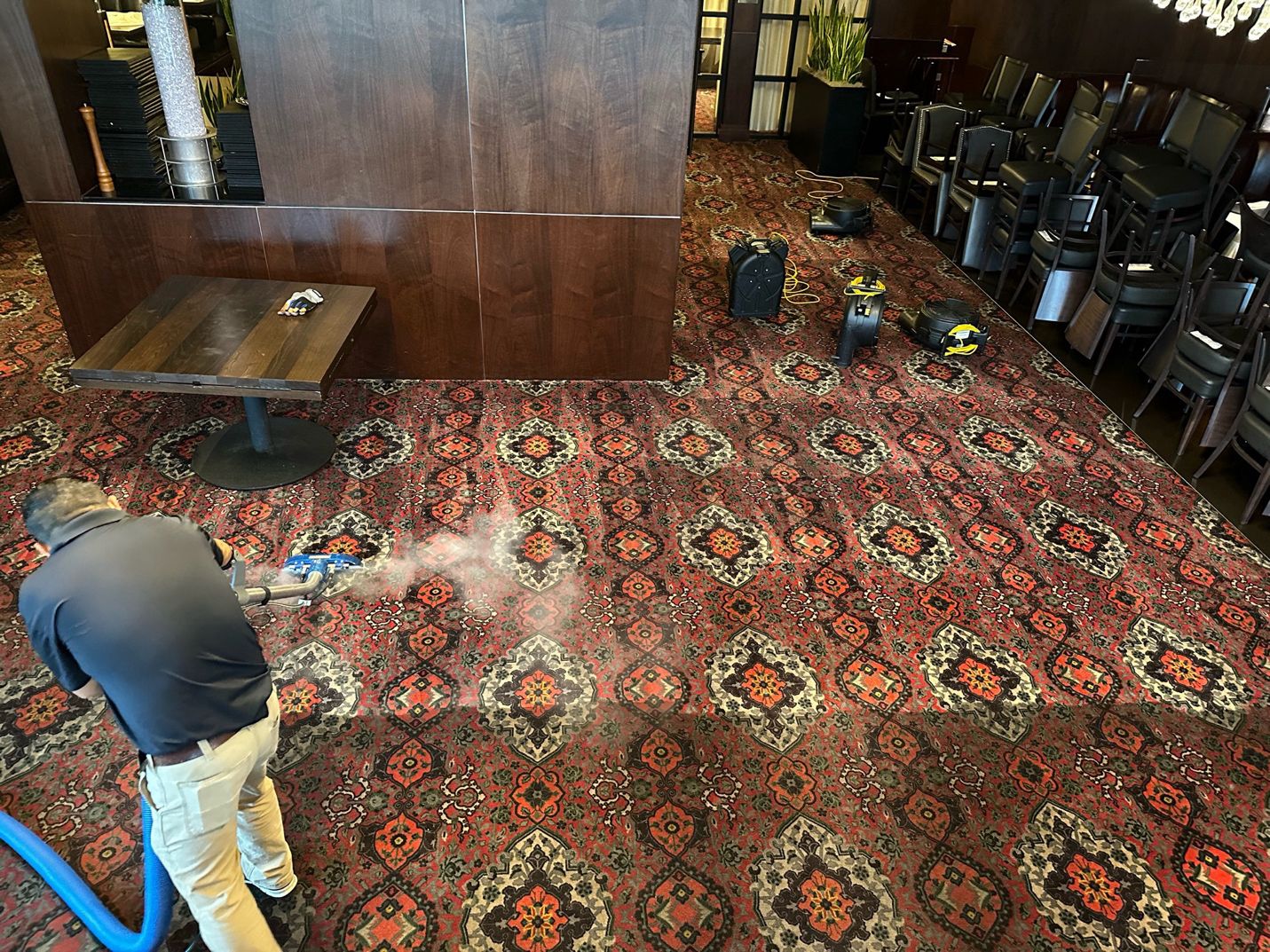
Commercial carpet deep cleaning in a restaurant dining area using professional extraction equipment

Commercial Carpet Cleaning Capabilities

The Right Process Depends on the Carpet—not a Preferred Machine

Commercial carpet cleaning should be selected according to the fiber, construction, contamination, stains, traffic, access, drying requirements and operating schedule of the property.

Renue Hawaii combines restorative extraction, low-moisture maintenance, fiber-safe chemistry and targeted corrective services so each area receives the level of treatment it actually requires.

Hot-Water Extraction

Hot-water extraction is used when carpet requires deeper rinsing and recovery of embedded soil, oils, spills, cleaning residue and odor-causing contamination held within the carpet pile.

Effective extraction depends on the correct chemistry, agitation, moisture recovery and drying plan—not simply maximum heat, pressure or water.

Common applications: hotel corridors, condominium common areas, ballrooms, function rooms, offices, restaurants and heavily contaminated traffic zones.

Low-Moisture Maintenance

Low-moisture encapsulation helps maintain carpet appearance between restorative services while reducing drying time and operational disruption.

This process is most useful when the carpet remains in maintainable condition. It should not replace restorative extraction when contamination has accumulated deeper within the carpet.

Common applications: occupied offices, carpet tile, meeting rooms, corridors, hotel hallways and areas that must return to service quickly.

Targeted Stain and Color Correction

Recurring spots, bonded staining, transferred dye, oily residue and chemical color loss should be evaluated separately from general carpet cleaning.

Some conditions respond to specialized stain treatment. Qualifying bleach marks and color-loss conditions may require localized carpet dye repair because cleaning cannot replace color that has been chemically removed.

Related services: commercial bleach-stain and carpet dye repair and commercial odor treatment .
Wool and Specialty Commercial Carpet

WoolSafe Standards Help Protect High-Value Carpet

Wool, wool-blend and specialty commercial carpets require more than a generic cleaning process. Fiber type, construction, chemistry, dilution, pH, temperature, agitation, moisture and drying must all be considered.

Renue Hawaii works with WoolSafe standards and fiber-appropriate methods for wool carpet in hotels, condominiums, corridors, ballrooms, function rooms and other high-value commercial installations.

When a manufacturer, installer, designer, warranty program or property standard specifies WoolSafe-approved chemistry or care requirements, those instructions become part of the cleaning scope rather than an afterthought.

Wool carpet can be an excellent choice for commercial corridors and hospitality spaces when professional maintenance begins early and follows the requirements of the carpet.
View the Nauru Tower wool carpet case study

Controlled Commercial Cleaning

More Heat, Pressure, Chemistry or Moisture Is Not Automatically Better

Carpet tile, glued-down installations, wool, specialty fibers, sensitive dyes, backing systems, adhesives and limited drying windows require different operating choices.

The objective is sufficient soil suspension, controlled rinsing, effective recovery and carpet protection—not maximum equipment output.

Renue follows applicable professional carpet-cleaning standards and considers commercial carpet-maintenance guidance when selecting the process.

Commercial Carpet Cleaning Results

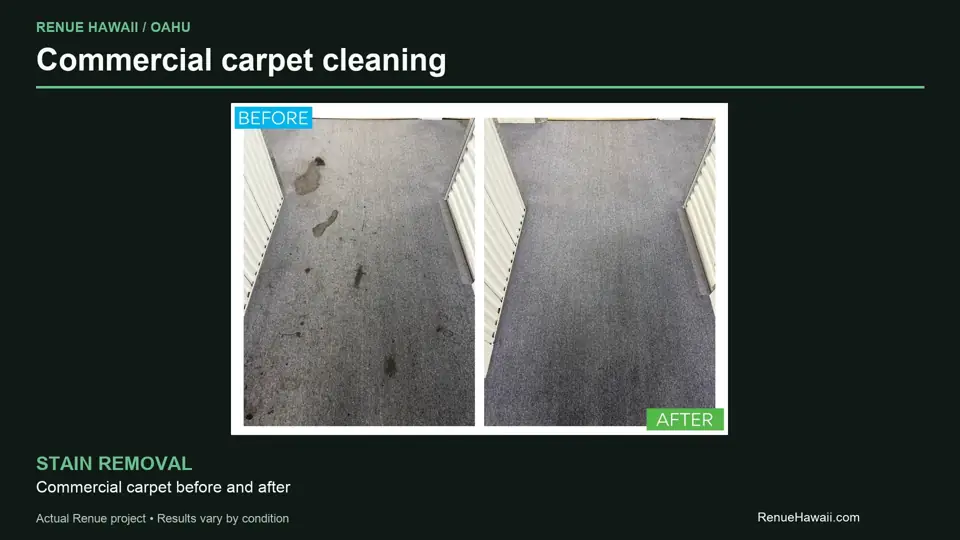
Before-and-After Improvement Must Be Interpreted Correctly

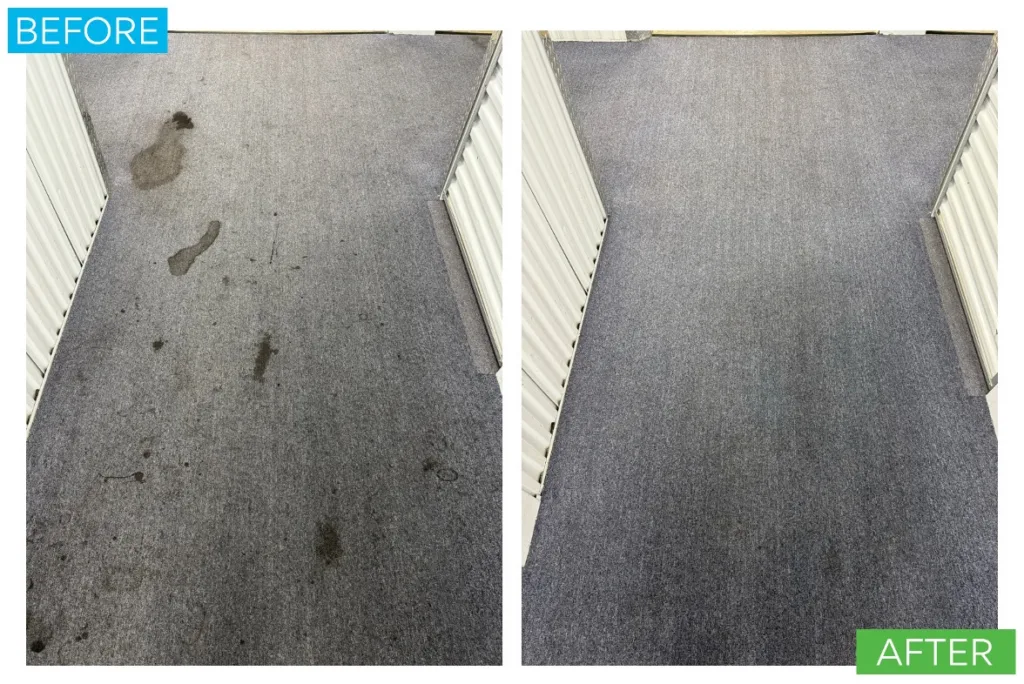
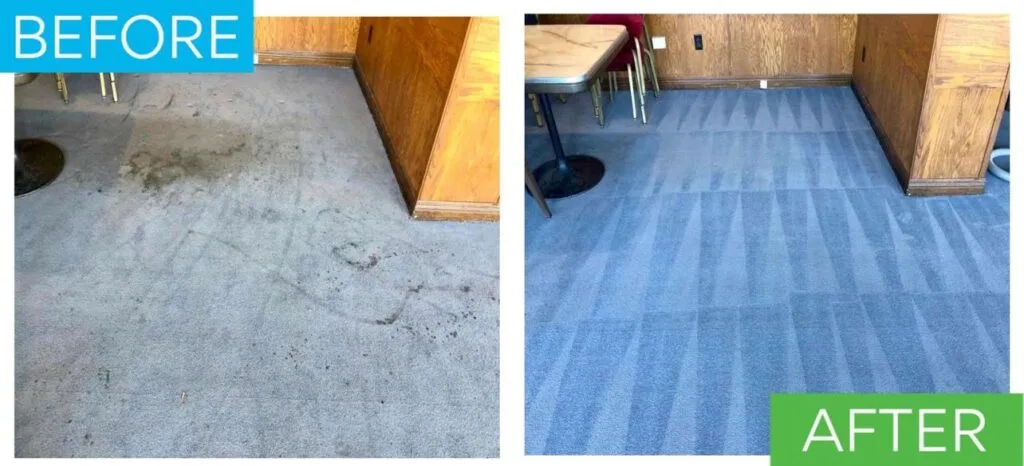
Professional cleaning can remove substantial contamination, restore color clarity and improve traffic areas. It cannot rebuild fibers that have been permanently abraded, replace missing dye or correct every seam, backing or installation failure.
Hotel ballroom carpet cleaning for high-traffic hospitality and event spaces

Hospitality and Occupied Properties

The Cleaning Plan Must Work Around Property Operations

Hotels, resorts, ballrooms, function rooms, restaurants, condominium corridors, offices and other occupied properties often cannot close an entire area for carpet cleaning.

Renue can coordinate overnight service, phased cleaning, floor sequencing, elevator access, event schedules, equipment staging, drying windows and morning reopening requirements as part of the scope.

The goal is not merely to complete the cleaning. It is to complete the correct work while keeping disruption proportionate to the condition being addressed.

Commercial Carpet Maintenance

Cleaning Frequency Should Follow Exposure—not One Calendar

Entrances, elevator approaches, primary walk paths, corridors, ballrooms, food-and-beverage areas, offices and lower-use spaces do not accumulate contamination at the same rate.

A strong maintenance program distinguishes among routine vacuuming, immediate spot response, interim low-moisture cleaning, scheduled extraction, restorative cleaning and specialized correction.

Higher-use zones may require professional attention more frequently than quieter sections of the same property. The schedule should be adjusted according to traffic, contamination, appearance standards, drying requirements and actual performance after cleaning.

Schedule Commercial Carpet Service

Request a Walkthrough, Scope Review or Written Quote

Tell us what areas need attention, what the carpet is doing now and when the property needs the work completed. Photos, floor counts, approximate square footage, carpet information and current maintenance history are helpful when available.

Renue will recommend the appropriate next step—whether that is restorative extraction, interim maintenance, targeted stain treatment, dye repair, odor treatment or an on-site assessment.

Schedule Commercial Carpet Service

Serving commercial properties across Oahu, Maui and the Big Island.
Get Expert Cleaning Support

Schedule a Commercial Carpet Cleaning Walkthrough

Contact Renue Hawaii to schedule a commercial carpet cleaning walkthrough and get clear scope, timing, and pricing for your property. We service Oahu, Maui, and the Big Island, with cleaning methods built for high-traffic corridors, condo common areas, hotel spaces, offices, ballrooms, and guest-facing commercial areas.

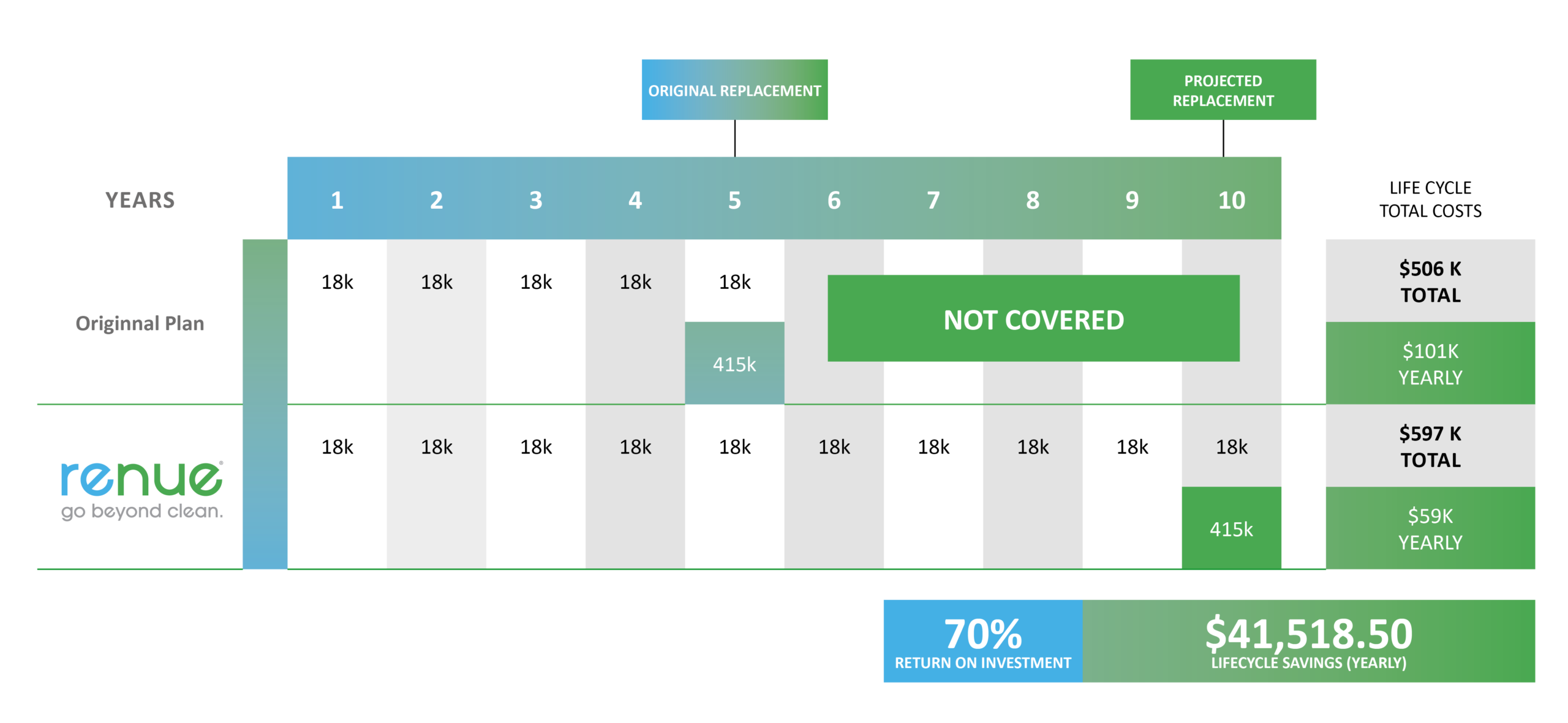
What Carpet Maintenance Saves Over Replacement

Commercial carpet replacement is a major capital decision, so the smartest ROI often comes from protecting the carpet before replacement becomes necessary. Industry guidance shows that routine vacuuming can remove 90–95% of dry soil, which matters because abrasive soil accelerates wear in traffic lanes and entry zones. Properly maintained commercial carpet can last up to 10 years or longer, especially when deep cleaning and spot correction are performed as part of a planned maintenance program. That makes scheduled carpet deep cleaning one of the most practical ways to improve appearance, reduce replacement pressure, and control long-term flooring costs.

Commercial carpet maintenance ROI chart comparing planned deep cleaning with early carpet replacement costs

Scheduled Carpet Deep Cleaning Helps Extend Carpet Life

Clean, well-maintained carpets shape first impressions in the spaces guests actually walk through, hallways, elevators, and event areas. Tripadvisor’s research shows cleanliness is the most important element travelers look for in an accommodation review, which is why carpet appearance (and odor) quietly influences ratings and repeat intent.  When carpets look and smell fresh, guest complaints drop, staff spends less time putting out fires, and your public-facing experience stays consistent.

Tripadvisor also reported survey findings that 92% of travelers said cleanliness is the most important factor when selecting accommodations.

Hotel ballroom carpet cleaning for high-traffic hospitality and event spaces

Questions people ask about our carpet cleaning services

Our commercial carpet deep cleaning is designed for hotels, resorts, condos, private clubs, offices, retail environments, restaurants, ballrooms, function rooms, and commercial buildings across Oahu, Maui, and the Big Island. We focus on high-traffic carpet where appearance, odor control, dry times, guest experience, resident experience, customer perception, and long-term carpet life matter.

Most high-traffic commercial carpets should be deep cleaned every three to six months, depending on traffic, spills, carpet type, appearance standards, and odor concerns. Hotel corridors, condo hallways, ballrooms, function rooms, restaurants, and busy commercial spaces may need quarterly service, while lighter-traffic buildings can often maintain results with one to two deep cleans per year.

We usually work overnight or during low-traffic windows, cleaning hallways, corridors, offices, ballrooms, function rooms, and common areas in phases. Corridors can often remain passable, and operational impact is minimal when the work is planned correctly. We coordinate ahead on floor sequencing, elevators, access points, event schedules, and dry times so your property can stay operational.

We combine hot water extraction for deep restorative cleaning with low-moisture methods for fast-turn areas. Hot water extraction removes embedded soils, spill residue, and contaminants from the carpet pile, while low-moisture encapsulation is ideal when shorter dry times are needed. Both methods are selected based on carpet type, soil level, traffic, dry-time needs, and manufacturer recommendations.

Yes. Renue Hawaii works with WoolSafe standards and fiber-safe methods for wool and specialty commercial carpets. That means correct chemistry, dilution, temperature, and pH are considered to help protect warranties, reduce the risk of shrinkage or texture damage, and extend the life of high-value carpets in hallways, corridors, ballrooms, function rooms, and commercial spaces.

In many cases, we can improve severe stains, bleach spots, discoloration, recurring spots, and problem areas without replacing the entire carpet section. We offer specialty stain removal and carpet dye repair for compatible fibers, helping properties correct visible problem areas in hallways, corridors, ballrooms, function rooms, offices, and guest-facing commercial spaces while avoiding the cost and disruption of full carpet replacement.

A Better Way to Manage Commercial Carpet

Commercial Carpet Is an Asset—not Just a Cleaning Expense

The purpose of commercial carpet maintenance is not simply to make carpet look cleaner after each visit. The larger goal is to preserve appearance, support daily operations, protect warranty requirements, and extend useful service life before replacement becomes necessary.

Renue Hawaii approaches commercial carpet as a long-term interior asset. That means evaluating what should be preserved, what can be recovered, where premature wear can be reduced, and when cleaning is no longer the complete answer.

This asset-management approach applies across hotel corridors and ballrooms, resort spaces, condominium common areas, corporate offices, restaurants, retail environments, clubs, senior-living communities, and other occupied commercial properties throughout Hawaii.

The lowest cleaning price is not always the lowest carpet cost. The better measure is how effectively the maintenance program protects appearance, operations, and remaining service life.

Preserve

Keep serviceable carpet from reaching restorative condition too quickly.

Carpet generally performs better when soil is removed before it becomes deeply embedded, traffic lanes become visibly distorted, or recurring spots spread into surrounding fibers.

  • Match service frequency to traffic and contamination
  • Address high-use areas before appearance decline becomes severe
  • Use maintenance methods appropriate for the carpet and operating schedule
  • Support manufacturer and warranty-care requirements where applicable

Management objective: maintain acceptable appearance while delaying the need for aggressive restoration or premature replacement.

Recover

Restore appearance when routine maintenance is no longer enough.

Carpet that appears worn may sometimes be heavily contaminated rather than permanently damaged. Embedded soil, oily residue, compacted traffic lanes, spots, and odor can reduce color clarity and make replacement appear necessary sooner than it is.

  • Separate removable contamination from permanent wear
  • Use restorative cleaning where surface maintenance has stopped producing results
  • Address stains and localized damage independently when needed
  • Reassess the carpet after soil and residue have been removed

Management objective: determine whether appearance can be recovered before committing capital to replacement.

Protect

Reduce the conditions that shorten carpet life between services.

Commercial carpet does not wear evenly. Entrances, elevator landings, corridor turns, food-service transitions, registration areas, ballroom access points, and other concentrated traffic zones typically accumulate contamination faster than surrounding areas.

  • Prioritize the areas carrying the greatest soil load
  • Control residue that can contribute to rapid resoiling
  • Reduce repeated contamination before it spreads into lower-use areas
  • Coordinate cleaning around occupancy, events, access, and drying requirements

Management objective: direct labor and cleaning intensity where they provide the greatest protection.

Plan

Know when cleaning remains the right investment—and when it does not.

Cleaning can remove contamination and improve appearance, but it cannot replace missing fiber, reverse severe abrasion, repair failed seams, rebond delaminated carpet, or correct every installation-related condition.

  • Document conditions that cleaning is unlikely to correct
  • Distinguish cleanable problems from repair or installation issues
  • Set realistic expectations before work begins
  • Use service results to guide future maintenance, repair, or replacement decisions

Management objective: invest in cleaning where it can create value and identify when another solution should be considered.

A Transactional Cleaning Approach

Focuses on the next visit

  • One process applied broadly
  • Frequency based mainly on the calendar
  • Success measured immediately after cleaning
  • Permanent wear may be mistaken for a cleaning failure
  • Replacement is considered after appearance has already declined

What This Looks Like in Practice

One property may require several carpet-management decisions.

A hotel ballroom may need restorative extraction after repeated event use. Adjacent corridors may need lower-moisture maintenance more frequently. A localized bleach mark may require color repair rather than additional cleaning. A damaged seam or delaminated section may need to be documented for repair.

Treating all four conditions as the same cleaning problem would either under-service the property or spend resources where cleaning cannot provide the complete solution.

What Renue Hawaii Provides

Renue Hawaii combines inspection, carpet and fiber considerations, contamination level, operational access, drying requirements, corrective needs, and realistic outcome expectations into one commercial scope.

The result is a maintenance recommendation designed to improve appearance now while helping the property make better decisions about future cleaning, repair, and replacement.

Get Expert Commercial Carpet Cleaning Support

Schedule a Commercial Carpet Cleaning Walkthrough

Work with Renue Hawaii

for commercial carpet deep cleaning, spot repair, odor treatment, and carpet restoration services built for high-traffic properties. We support hotels, resorts, condos, offices, restaurants, retail properties, senior living communities, and commercial facilities across Oahu, Maui, and the Big Island with clear scope, reliable scheduling, and results built for guest-facing, resident-facing, and customer-facing areas.

Schedule a Walk Through

Contact us for a walkthrough or quote—we’re here to support your facility with expert deep cleaning solutions across Hawaii.