
Stone Restoration · Oahu Resorts & Condos
Marble Etching vs. Staining: The Oahu Property Manager’s Guide to Stone Restoration
Two marks that look similar need opposite responses, and treating an etch like a stain can deepen the damage.
When a mark appears on a marble vanity or lobby floor, the instinct is to scrub it. The first step is identifying which problem you are looking at, because one is damage to the surface and the other is color inside the stone.
We assess whether the mark is etching, staining, or mineral buildup, then recommend the correct process.
Identifying the Damage
Is it an etch or a stain?
The etch
Marble is composed of calcium carbonate, which reacts to acids. When lemon juice, wine, or acidic cleaners contact the surface, they damage the top layer of the stone. This leaves a dull, cloudy spot. Looked at from an angle, the polish is gone.
- What it is: physical damage to the stone’s surface, not dirt on it.
- Feels like: dull, cloudy, rough, or lighter than the surrounding stone.
- Corrected by: honing or polishing. Cleaning alone will not remove true etching.
The stain
A stain occurs when a substance, like coffee or oil, seeps into the pores of the marble. The surface remains smooth and polished, but the color has changed underneath.
- What it is: pigment contamination inside the stone.
- Feels like: smooth and polished, with changed color below the surface.
- Corrected by: poulticing, deep cleaning, or sealing correction, depending on the substance.
These are field identifications, not a confirmed diagnosis. A mark that survives normal cleaning should be assessed in person before treatment is chosen, especially where mineral buildup may be hiding the stone’s condition.
Local Conditions
The Hawaii factor: hard water and mineral buildup
Oahu’s mineral-rich water adds another layer of complexity. As covered in our guide on hard water stain removal, calcium buildup can hide the condition of the stone beneath it. When minerals bond to a marble surface, they can trap moisture against the stone, and marks that look like simple scale sometimes turn out to be etching once the mineral layer is removed.
Assessment has to separate the two before treatment is chosen. Removing the mineral layer first shows whether the stone underneath is stained, etched, or sound, and each of those leads to a different scope.
Handle With Care
Why surface cleaning can make it worse
All-purpose cleaners that contain citric acid or vinegar are among the substances that cause etching. On an already etched surface, the finish is compromised and the stone can absorb liquids faster than before. That is why a mark that survives normal cleaning should be assessed as possible surface damage, not scrubbed harder.
The Renue Method
Diamond phase stone restoration
We do not use topical waxes that yellow over time. We perform a mechanical restoration of the stone itself, in three phases:
- Grinding and honing: diamond pads refine away the etched layer of the stone, removing the damage and leveling the surface.
- Sequential polishing: progressively finer diamond grits restore the stone’s natural light reflectivity and the desired finish.
- Sealing: once restored, a professional-grade impregnating sealer fills the pores of the marble, giving housekeeping more time to wipe up spills before they become etches or stains.
Restoration returns the existing stone to service instead of replacing it, which keeps the surface the property already owns in use for longer.
Related Service
Marble restoration & sealing
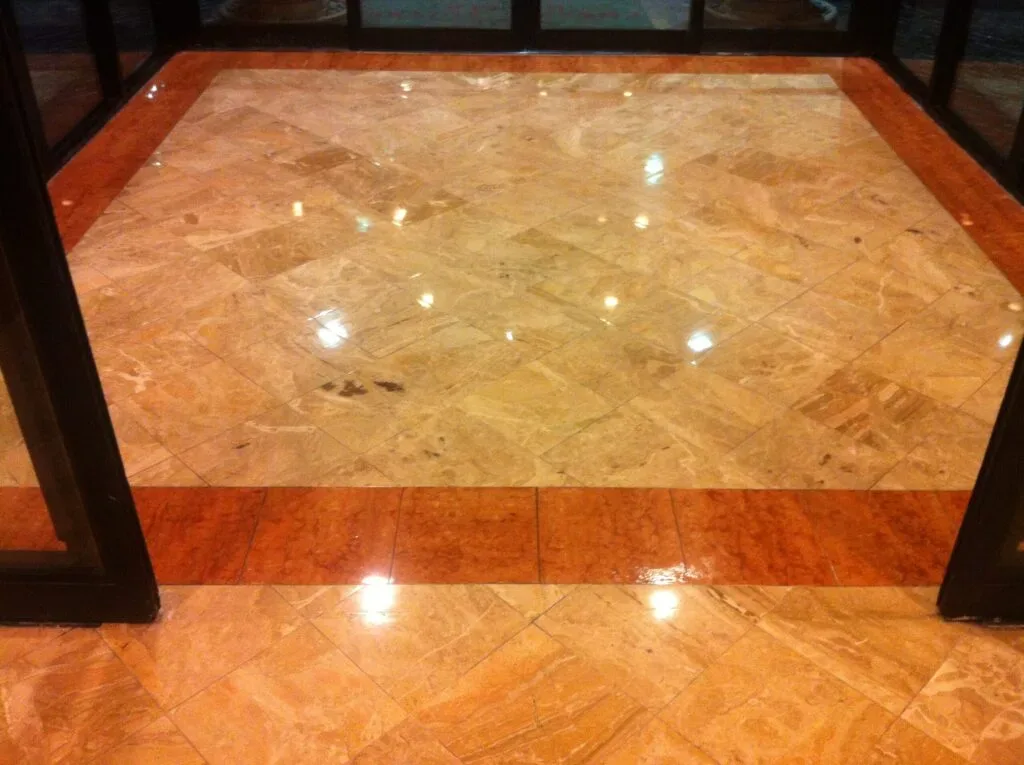
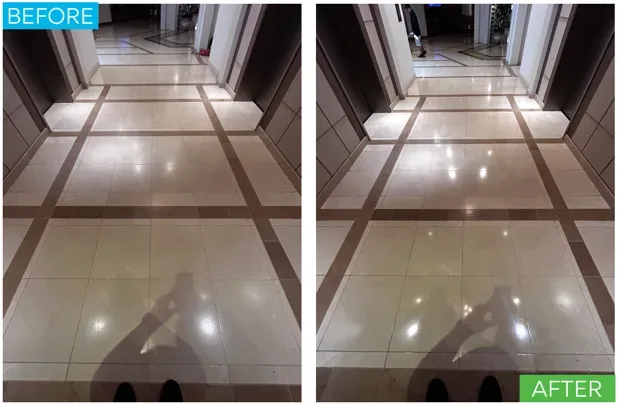
The full service scope for hotel and resort stone: assessment, honing, polishing and sealing, planned around occupied operations. The photograph shows a marble floor before and after Renue restoration.
View marble restoration & sealingQuestions
Stone restoration FAQ
What is the difference between marble etching and staining?
Etching is chemical damage to the surface of the marble that creates dull, cloudy, or rough-looking spots. Staining is discoloration caused by liquid absorbing into the stone’s pores. Etching changes the surface finish, while staining changes the color inside the stone.
Can marble etch marks be polished out?
Yes. Marble etch marks can often be removed through professional honing and diamond polishing. The damaged surface layer is mechanically refined, then polished back to the desired finish. Cleaning alone will not remove true etching.
Can you remove water rings from marble?
Yes. Many water rings on marble are actually etch marks caused by minerals, acidic residue, or trapped moisture. Renue Hawaii can assess whether the ring is etching, staining, or mineral buildup, then recommend the correct restoration process.
Can marble be made stain proof?
No natural stone is completely stain proof, but professional sealing can make marble more stain resistant. A quality penetrating sealer helps slow absorption, giving housekeeping or maintenance teams more time to wipe up spills before they become deeper stains.
When should a property manager restore marble instead of cleaning it?
Marble should be restored when the surface stays dull, cloudy, etched, scratched, or uneven after normal cleaning. If the polish is gone or the stone has chemical damage, professional honing, polishing, and sealing are usually needed to reset the surface.
Next Step
Request a stone assessment
Call Renue Hawaii on Oahu or request a walkthrough. We will identify whether the marks are etching, staining, or mineral buildup, and scope the correct process.